Corporate Anthem Video Guide
What a corporate anthem video is, when your brand needs one, and how AI-first production makes a cinematic manifesto film fast and affordable.
Published 2026-07-02 · Video Marketing · Neverframe Team
What a Corporate Anthem Video Actually Is
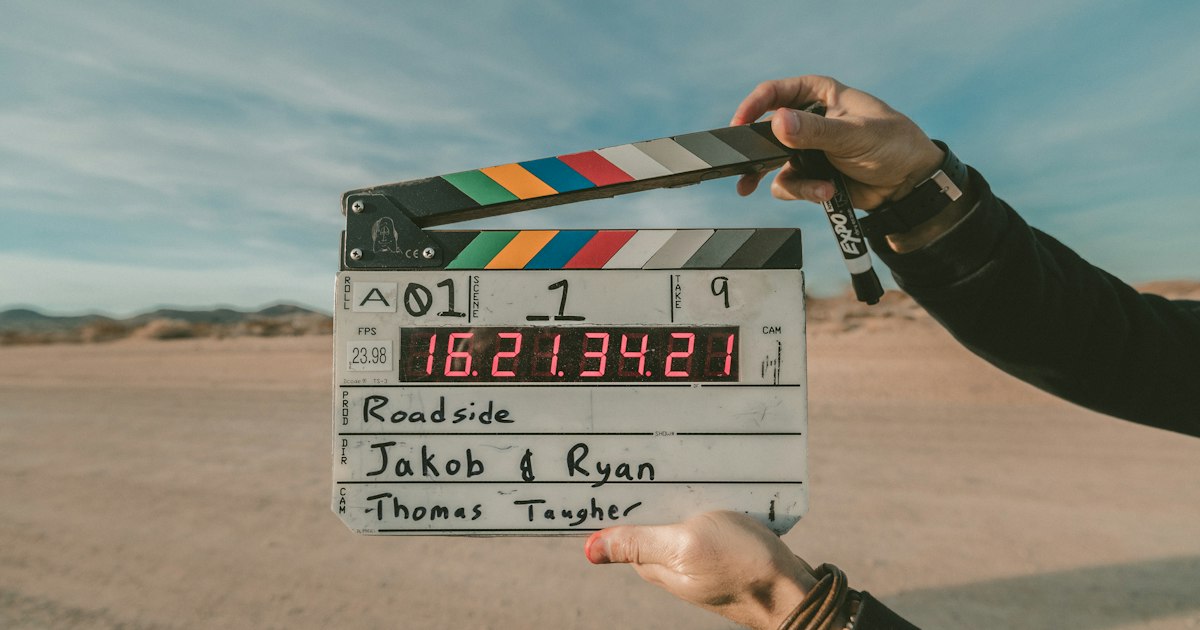
A corporate anthem video is a short cinematic film, usually 60 to 120 seconds long, that puts a company's mission, values, and identity into moving pictures, music, and language people remember. It is not a product demo and it is not a testimonial reel. It is the closest thing a business has to a rallying cry you can watch. When a leadership team stands on stage at an all-hands and the lights dim, the corporate anthem video is what plays first, and it is what sets the emotional register for everything that follows.
The phrase gets used loosely, so let's be precise. A corporate anthem video (sometimes called a company anthem film or a brand manifesto video) exists to make people feel something about who the company is and why it exists. The content is deliberately not transactional. You will rarely hear pricing, feature lists, or a hard call to action. Instead you get a point of view, a promise, and a tone. Done well, it works on two audiences at once: employees who need to believe in the work, and the outside world that needs a reason to care.
This guide covers the format in full. We will define what a corporate anthem video is and is not, when a company actually needs one, the anatomy of a film that lands, how to script the manifesto, what AI-first production changes about cost and speed, where to distribute it, how to measure whether it worked, and the mistakes that quietly sink most attempts. By the end you should be able to brief a production team, or brief us, with real confidence.
Corporate Anthem Video vs Brand Film vs Culture Video
The single most useful thing you can do before commissioning a corporate anthem video production is understand what it is not. The category sits next to three close cousins, and briefs go wrong when a client asks for one and describes another. Each format has a different job, a different audience posture, and a different success metric.
A brand film tells a story about the product, the market problem, or the origin of the company. It has narrative arc and characters. It often runs two to four minutes and lives on a campaign landing page or a launch. If you want to explore that format in depth, our brand film production guide breaks down structure and budget.
A brand storytelling video centers a specific narrative, frequently a customer or a founder, and uses that single thread to carry a larger message. It is intimate and particular where an anthem is broad and declarative. The difference matters for scripting, and our brand storytelling video guide covers the narrative craft.
A company culture video shows what it actually feels like to work somewhere. Day-in-the-life footage, real employees, unscripted moments. It is observational, not aspirational. If you need people to see the office, the team, and the vibe, that is a culture piece, and the company culture video production guide is the right reference.
A brand manifesto video is the anthem in its purest form. Pure statement of belief, minimal or no plot, heavy on voiceover and visual metaphor. In practice the terms "corporate anthem video" and "brand manifesto video" are used interchangeably, and most anthem films lean manifesto.
Here is how the formats compare on the dimensions that actually change a production plan.
| Dimension | Corporate Anthem Video | Brand Film | Culture Video | Brand Storytelling Video |
|---|---|---|---|---|
| Primary job | Express identity and rally belief | Tell product or market story | Show what it's like to work here | Carry a message through one narrative |
| Typical length | 60 to 120 sec | 2 to 4 min | 90 sec to 3 min | 90 sec to 3 min |
| Emotional register | Aspirational, declarative | Narrative, persuasive | Warm, observational | Intimate, personal |
| Voice | Manifesto voiceover | Character or narrator | Real employees | One protagonist |
| Plot | Minimal or none | Clear arc | Loose | Central |
| Best home | All-hands, homepage hero | Campaign page, launch | Careers page | Case study, social |
| Success metric | Recall, sentiment, alignment | Consideration, brand lift | Applications, quality of hire | Engagement, shares |
If your goal is a homepage that stops a first-time visitor, note that the anthem is often paired with, or built into, the site's hero video. And if the real objective is recruiting, an anthem can anchor a broader employer branding video strategy rather than stand alone.
The takeaway: name the job before you name the format. A corporate anthem video that tries to also demo the product, show the office, and tell a customer story will do none of them well.
When a Company Actually Needs an Anthem Film
Not every company needs a corporate anthem video, and the ones that commission them at the wrong moment usually waste the budget. The format earns its cost at inflection points, moments when a company's identity is either changing or being publicly asserted. Here are the triggers that reliably justify one.
Rebrand or repositioning
When you change your name, logo, category, or promise, words on a slide will not carry the shift internally. An anthem film gives the new identity a face and a feeling in ninety seconds. It becomes the artifact people share to explain "here is who we are now."
Funding round or investor moment
Founders raising a Series A or beyond increasingly open investor days and data rooms with a short anthem. It signals ambition and maturity, and it frames the numbers that follow. A film that costs a fraction of one month's burn can meaningfully shape how a room receives a pitch.
IPO or major liquidity event
Going public is a story-telling exercise as much as a financial one. The roadshow, the listing day, the internal celebration, all benefit from a company anthem film that compresses years of work into a single emotional statement.
Merger or acquisition
Nothing unsettles employees like a merger. Two cultures, two sets of anxieties. A well-made anthem that articulates the combined mission gives the new entity something to stand behind on day one, which matters because integration failures are usually cultural, not operational.
Milestone or anniversary
Tenth anniversary, one millionth customer, a category-defining launch. Milestones are natural anthem moments because there is genuine emotion to work with and a clear "look how far we've come, here's where we're going" structure.
Culture reset
Sometimes a company loses the plot internally. Growth outpaced identity, or a hard year drained morale. A corporate anthem video, especially one played at an all-hands, can re-anchor people to why the work matters. This is closely tied to internal communications video, where the anthem often opens a larger internal program.
Recruiting push
When you are scaling headcount fast, especially for competitive roles, an anthem that expresses purpose helps you win candidates who have offers elsewhere. Gallup's long-running research on engagement shows that people who connect emotionally to a company's mission stay longer and perform better, which is exactly the belief an anthem is trying to seed. You can read Gallup's engagement findings at gallup.com/workplace and the broader engagement data at gallup.com/workplace/employee-engagement.
If none of these apply, and you simply want more marketing content, an anthem is probably the wrong spend. Reach for a product-led brand film or a social series instead.
The Anatomy of a Great Corporate Anthem Video
A corporate anthem video is deceptively simple to watch and genuinely hard to make. Every element carries disproportionate weight because there is so little runtime. Here is what separates the films people quote back to you from the ones people forget by the parking lot.
The script and manifesto copy
The words are the spine. An anthem script is not a paragraph read aloud, it is a series of short, declarative lines built to be spoken with weight. Think in beats, not sentences. Each line should be able to stand alone as a statement of belief. The best manifesto copy has rhythm you can feel even on the page, and it resists cleverness in favor of conviction.
The voiceover
Most anthems live or die on voice. A single narrator, often an internal leader for authenticity or a professional voice for polish, delivers the manifesto. The casting decision is strategic: a founder's real voice signals sincerity, a professional read signals scale and confidence. Some of the strongest films use no voiceover at all, letting text on screen and music carry the meaning.
Visual language
Anthem visuals trade in metaphor and mood more than literal depiction. You are building a feeling, so the imagery leans cinematic: wide establishing shots, human faces in close-up, motion, light, texture. Consistency of grade and framing is what makes ninety seconds feel like a film rather than a montage. This is precisely where AI-first production has changed the economics, because the cinematic imagery that once required location shoots and crews can now be generated and composited with far less cost.
Music and sound design
Music is not decoration in an anthem, it is structure. The track dictates pacing, builds tension, and delivers the emotional payoff at the final line. Custom scoring or carefully licensed music, plus real sound design, is what makes the difference between a film that feels expensive and one that feels like a slideshow with a stock track.
Pacing and length
The sweet spot is 60 to 120 seconds. Under 60 and you cannot build; over 120 and you lose the room. Pacing typically starts slow, establishes stakes, accelerates through the middle, then resolves on a single strong closing statement. That closing line is the one people remember, so it earns the most rewriting.
The closing statement
Every great anthem lands on a line. It is the thesis, the promise, or the challenge, and it should be short enough to become a tagline, a Slack status, a wall in the office. If you cannot name your closing line before production starts, the script is not finished.
Internal vs External Use Cases
The reason a corporate anthem video is worth building once is that it works in two directions. The same film, sometimes with a slightly different edit, serves both employees and the outside world. Understanding the two use cases up front changes how you script and shoot.
Internal use is about belief and alignment. The anthem opens all-hands meetings, anchors onboarding so new hires understand the mission on day one, and reappears during culture resets or milestone celebrations. Internally, authenticity beats polish. Employees can smell a film that overpromises, so internal anthems benefit from real voices and real references to the actual work.
External use is about positioning and attraction. The anthem becomes the homepage hero, the opener at investor days, the pinned post on LinkedIn, the film a recruiter sends a candidate who is on the fence. Externally, production value and clarity matter more, because you are competing for attention against everything else on the internet.
The strongest programs plan for both from the start. You shoot and generate enough material to cut a longer internal version, which can carry more specific detail, and a tighter external version, which stays broad and aspirational. Building both at once is dramatically cheaper than commissioning two separate films, and AI-first production makes multiple edits and aspect ratios nearly free compared to reshooting.
How to Script the Manifesto
Scripting is where most corporate anthem video projects are won or lost, and it is the part clients most often underestimate. A manifesto is not a mission statement with better lighting. Here is a working method.
Start from a single belief
Before you write a line, answer one question: what does this company believe that its competitors either do not believe or will not say out loud? That belief is your foundation. Everything in the manifesto should ladder back to it. If you cannot articulate a belief that would make a competitor uncomfortable, keep digging, because a safe belief produces a forgettable anthem.
Write in beats, not paragraphs
Draft the manifesto as a list of short lines. Read each one aloud. If it does not carry weight when spoken slowly, cut it or rewrite it. Aim for lines that a leader could deliver on stage without notes. Rhythm matters: vary line length, let some lines land hard and short, let others build.
Build the emotional arc
A manifesto still needs a shape. A common and effective structure moves through three movements. First, name the tension or the status quo you reject. Second, state what you believe and what you do about it. Third, resolve on the promise or the challenge. This gives the voiceover somewhere to go and gives the music something to build toward.
Protect the closing line
Spend disproportionate effort on the last line. It is what survives. Write twenty versions. Say each one out loud in a meeting and watch which one makes people sit up. That is your closing line, and often it becomes the film's title and the company's tagline.
Pressure-test against the real company
The fastest way to make an anthem cynical is to promise things the company does not do. Before locking the script, put it in front of employees. If they roll their eyes, the manifesto is aspirational fiction, not identity. Adjust until the words feel earned. HubSpot's research on content that resonates consistently points to authenticity as the differentiator; you can browse their marketing research at hubspot.com/marketing-statistics.
Here is a compact checklist you can hand to a writer.
| Element | Question to answer | Common failure |
|---|---|---|
| Core belief | What do we believe that rivals won't say? | Belief is safe and generic |
| Structure | Tension, conviction, resolution? | No arc, just adjectives |
| Line rhythm | Does each line land spoken aloud? | Reads like a paragraph |
| Closing line | Can it become a tagline? | Trails off with no payoff |
| Truth test | Would employees believe it? | Promises the company can't keep |
AI vs Traditional Production: Cost and Speed
This is where the economics of a corporate anthem video have genuinely shifted, and it is the core of why an AI-first studio like Neverframe exists. For most of the format's history, cinematic production value meant location scouting, crews, talent, equipment rental, travel, and weeks in post. That put a genuinely cinematic anthem film out of reach for anyone but large enterprises with six-figure budgets.
AI-first cinematic production changes the math. Instead of flying a crew to a location, you generate the location. Instead of casting, scheduling, and shooting talent for aspirational b-roll, you produce it. Instead of waiting weeks for an edit and grade, you iterate in days. The creative direction, the script, the sound design, the taste, all of that still requires human craft. What changes is that the expensive, slow, logistics-heavy parts of production collapse.
The result is not "cheaper because it's worse." A well-executed AI-first anthem can reach a level of cinematic quality that would have cost far more traditionally, precisely because the budget goes to creative decisions rather than logistics. For a deeper breakdown of where the savings come from, see our AI video production cost guide.
Here is a realistic comparison for a 90-second corporate anthem video.
| Factor | Traditional Production | AI-First Production (Neverframe) |
|---|---|---|
| Typical budget | $40,000 to $150,000+ | $8,000 to $30,000 |
| Timeline | 6 to 12 weeks | 2 to 4 weeks |
| Location shoots | Required, plus travel | Generated, no travel |
| Talent and crew | Cast, scheduled, paid | Minimal or none |
| Revisions | Costly, may need reshoots | Fast, iterative, no reshoot |
| Multiple edits and aspect ratios | Each costs more | Near-marginal cost |
| Reuse and updates later | Reshoot required | Regenerate as needed |
A few honest caveats. AI-first production shines for the metaphorical, cinematic, aspirational imagery that anthems rely on. If your anthem absolutely requires filming your actual factory floor, your real named executives, or a specific documented event, you will still want live capture for those moments, often blended with generated material. The best modern anthems are hybrids, and a good studio will tell you which shots to generate and which to film.
The speed advantage is not just about being fast. It changes what is possible strategically. Because iterations are cheap, you can test multiple directions, A/B different closing lines, produce a fresh cut for a specific investor day, or update the film after a rebrand without starting over. That flexibility is arguably worth more than the raw cost savings.
Distribution: Where the Anthem Earns Its Keep
A corporate anthem video that lives only in a shared drive is a wasted investment. The distribution plan should exist before production starts, because it influences the edits you commission. Here are the channels that matter and how to use each.
All-hands and internal events
This is the anthem's home turf. Play it full-screen, with real sound, to open a company meeting. The room energy it creates is the single best justification for the format. Loop it on screens during onboarding week so new hires absorb the mission before their first meeting.
Homepage hero
An anthem, or a tightly cut version of it, makes a powerful homepage hero that tells a first-time visitor who you are in seconds. Muted-autoplay with captions is standard, since most homepage traffic starts without sound. Pair this with the guidance in our hero video guide for placement and technical specs.
LinkedIn and organic social
The anthem's aspirational tone performs well on LinkedIn, especially around funding announcements, rebrands, and milestones. Wyzowl's annual video marketing survey consistently reports that the large majority of businesses see video as delivering positive ROI and that people retain far more of a message watched than read; their data lives at wyzowl.com/video-marketing-statistics. Cut a square or vertical version for feed, and lead with a strong first three seconds.
Recruiting and careers
Send the anthem to candidates in the pipeline, embed it on the careers page, and include it in offer packages. When a candidate is weighing two offers, a film that makes your mission tangible can tip the decision. This works best as part of a fuller employer brand effort.
Investor days and fundraising
Open a data room or an investor presentation with the anthem. It frames the founders as builders with conviction, not just operators with a spreadsheet. A short, confident film sets a tone that the following slides benefit from.
Sales and events
Some companies open major sales meetings, conference keynotes, or booth loops with the anthem. Used sparingly, it primes an audience to receive the pitch that follows. Forbes has covered how emotional brand storytelling drives business outcomes; their business coverage is a useful reference at forbes.com.
Measuring the Impact of a Corporate Anthem Video
Anthems are emotional, which makes people assume they cannot be measured. That is a mistake. You can and should measure a company anthem film, using metrics matched to its dual purpose.
For internal impact, look at engagement survey shifts after the anthem is introduced into onboarding and all-hands, especially questions about mission clarity and pride in the company. Track onboarding comprehension: do new hires articulate the mission accurately in their first weeks? Watch qualitative signals too, whether the closing line starts showing up in Slack, in decks, on office walls. Harvard Business Review has published extensively on how a clear, felt sense of purpose correlates with performance and retention; their research library is at hbr.org.
For external impact, the metrics are more familiar. On the homepage, measure watch-through rate, bounce rate changes, and time on page. On social, track view counts, watch time, engagement rate, and shares, since shares of an anthem are a strong signal it resonated. For recruiting, watch application volume and, more importantly, candidate quality and offer-acceptance rate around the time the film goes live. For fundraising, the impact is qualitative but real: how rooms respond when the film opens a pitch.
A practical approach is to define, before production, one internal metric and one external metric you will actually track. Vague goals produce vague films. A brief that says "increase mission-clarity survey scores by ten points and lift homepage watch-through to fifty percent" produces a sharper anthem than one that says "make people feel something."
Common Mistakes to Avoid
Most disappointing corporate anthem videos fail for predictable reasons. Knowing them in advance is the cheapest insurance you can buy.
- Trying to do everything. An anthem that also demos the product, shows the office, and tells a customer story becomes a mediocre everything. Pick the anthem job and protect it.
- A generic belief. If your manifesto could belong to any company in your industry, it will move no one. The belief has to be specific and slightly uncomfortable to be memorable.
- Overpromising. When the film describes a company that employees do not recognize, the anthem breeds cynicism instead of pride. Truth first.
- A weak closing line. Films that trail off waste the one line people would have remembered. Overinvest in the ending.
- Stock music and stock everything. Cheap, familiar tracks and generic imagery signal that the company did not care, which undermines a film whose whole point is conviction.
- Ignoring sound. A great anthem is a great audio experience. Treating music and sound design as an afterthought is the fastest way to make expensive footage feel cheap.
- No distribution plan. Commissioning the film before deciding where it lives means you cut the wrong versions and it dies in a folder.
- Wrong length. Under a minute cannot build; over two minutes loses the room. Respect the format's natural runtime.
- Design by committee. Anthems require a point of view. When every stakeholder sands down every edge, you end up with something inoffensive and forgettable. Assign one decision-maker.
- Skipping the truth test. Not showing the script to real employees before locking it is how you discover, too late, that the manifesto reads as fiction.
Frequently Asked Questions
How long should a corporate anthem video be?
The proven range is 60 to 120 seconds. Under a minute rarely gives the film room to build an emotional arc, and past two minutes attention drops sharply, especially externally. Ninety seconds is a common sweet spot. If you need a longer internal version with more specific detail, cut it as a separate edit rather than stretching the main film.
What is the difference between a corporate anthem video and a brand film?
An anthem expresses the company's identity, mission, and values as a statement of belief, with minimal plot and heavy voiceover. A brand film tells a story, usually about the product, market problem, or origin, with characters and a narrative arc, and it usually runs longer. Anthems rally and position; brand films persuade and explain. Our brand film production guide covers the storytelling format in detail.
How much does a corporate anthem video cost?
Traditionally, a cinematic anthem ran from roughly $40,000 to well over $150,000 depending on location shoots, talent, and crew. With AI-first cinematic production, a comparable 90-second anthem typically lands between $8,000 and $30,000, because the expensive logistics of shooting are replaced by generated and composited imagery. The savings come from production logistics, not creative quality. See our AI video production cost guide for a full breakdown.
Can an anthem film work for both internal and external audiences?
Yes, and the best ones are built for both from the start. The same core film can be cut into a longer internal version with more specific detail for all-hands and onboarding, and a tighter external version for the homepage, social, and recruiting. Producing both editions at once is far cheaper than commissioning two separate films, and AI-first production makes additional edits and aspect ratios nearly free.
How is a corporate anthem video different from a culture video?
A culture video shows what it actually feels like to work at a company, using observational day-in-the-life footage and real employees. An anthem is aspirational and declarative, expressing the mission and values rather than documenting daily life. Culture videos live on careers pages and support recruiting; anthems open all-hands and anchor homepages. The company culture video production guide explains the observational format.
How fast can an AI-first anthem film be produced?
An AI-first corporate anthem video production typically takes two to four weeks from brief to final cut, compared to six to twelve weeks for a traditional shoot. Because iterations are fast and cheap, you can also test multiple creative directions and closing lines within that window, which is difficult and expensive with traditional production.
Do we need professional voiceover talent for the manifesto?
Not necessarily. A founder or leader delivering the manifesto in their real voice signals authenticity and often works beautifully for internal and investor audiences. A professional voice signals scale and polish, which can suit a homepage or a large external launch. Some of the strongest anthems use no voiceover at all, carrying the meaning through on-screen text and music. The right choice depends on the audience and the tone you want.
Commission Your Corporate Anthem Film
A corporate anthem video is one of the highest-leverage films a company can make, because a single piece serves the all-hands stage, the homepage, the recruiting pipeline, and the investor room at once. What used to require a six-figure budget and three months of logistics is now achievable in weeks, at a fraction of the cost, without giving up cinematic quality.
Neverframe is an AI-first cinematic production studio built for exactly this. We handle the script and manifesto copy, the visual language, the music and sound design, and the multiple edits your distribution plan needs, and we deliver at a speed and cost that traditional studios cannot match. Whether you are rebranding, raising, celebrating a milestone, or resetting your culture, we can turn your mission into a film people actually remember.
Ready to build one? Visit neverframe.com to see our work and request a quote for your corporate anthem video. Tell us the belief at the center of your company, and we will help you say it in ninety seconds people will not forget.