Video Production Services Guide
Video production services cover far more than showing up with a camera. This guide explains what professional services include and what outcomes to expect.
Published 2026-04-02 · Industry Insights · Neverframe Team
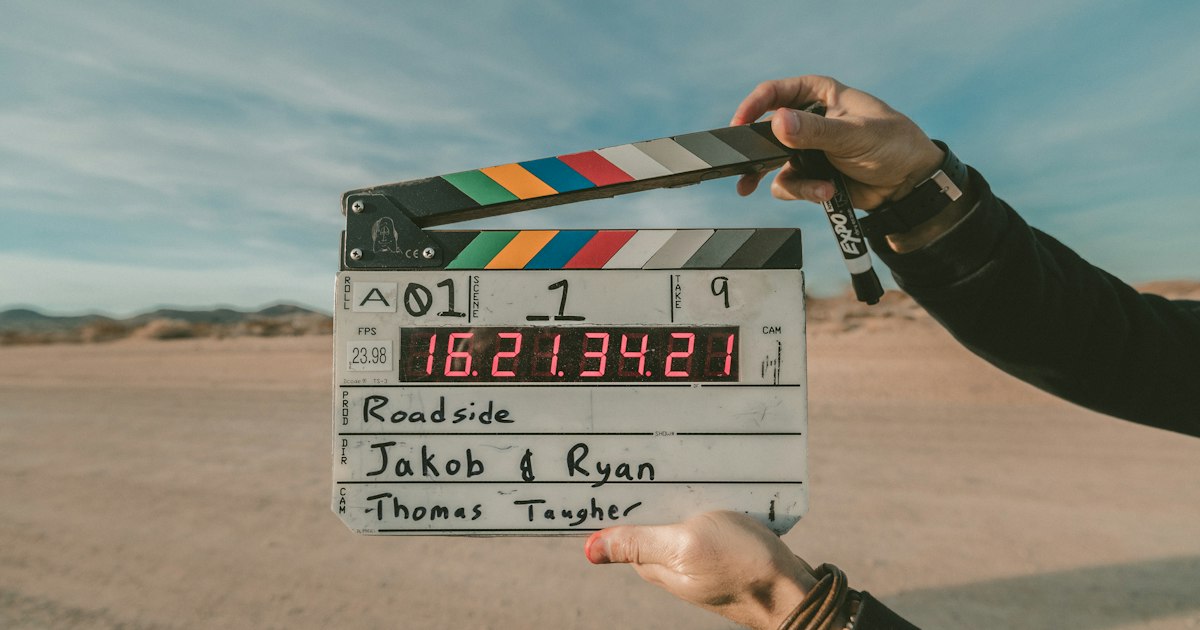
Brands that hire a video production company for the first time often discover that the service is far more complex than they anticipated. What looks like a simple transaction, you pay for a video and receive a video, involves dozens of professional disciplines, significant logistics, and a chain of creative decisions that determine whether the end result does anything useful for your business.
This guide maps out what professional video production services actually include, what distinguishes excellent providers from average ones, and how to structure the relationship so you get the outcome you are paying for.
The Full Scope of Video Production Services
Professional video production services span three distinct phases, each requiring different skills and resources. Most brands focus on the shoot itself. The most important decisions happen before and after it.
Pre-Production Services
Pre-production is the phase that determines whether a production succeeds or fails. The work done here before a camera turns on sets everything that follows.
Creative development is where the concept, tone, and narrative strategy take shape. This includes brief analysis, concept development, script writing, and creative presentations for client review. For some productions, this phase is straightforward. For brand campaigns or complex storytelling formats, it can involve multiple rounds of concepting.
Storyboarding and visual development translates the approved concept into a frame-by-frame visual plan. Storyboards give all stakeholders, client, director, and crew, a shared reference for what the final video should look like. AI tools have accelerated this process significantly, allowing production companies to generate visual references and early storyboards faster than traditional hand-drawn or illustrator-based methods.
Casting involves identifying, auditioning, and securing on-camera talent appropriate for the production. This applies to actors, presenters, spokespersons, and real customers in testimonial formats. Casting includes talent negotiation, contracts, and union compliance where applicable.
Location scouting and securing means finding physical environments that match the creative vision, obtaining the necessary permits, and managing location agreements. Professional location scouts understand what looks good on camera versus what looks good in person, and they account for lighting conditions, acoustic properties, and logistical access.
Production planning covers the logistics of executing the shoot: crew coordination, equipment rental, transportation, catering, scheduling, safety planning, and contingency management. A well-planned production runs smoothly even when unexpected things happen. A poorly planned one absorbs budget and time in friction.
Production Services
Production is the shoot itself. The services delivered here depend on the type of video being produced, but a full-service production engagement typically includes the following.
Direction is the creative leadership of the shoot. The director works with talent to achieve the performances and visual coverage needed for the edit. Great directors are simultaneously managers, communicators, and visual artists. They make fast decisions under pressure and adapt creatively when plans change.
Cinematography is the visual language of the video. The director of photography (DP) designs the lighting approach, selects lenses, and executes the camera work that creates the look of the piece. The DP is one of the most consequential roles on set.
Audio recording captures clean dialogue, ambient sound, and any live music or sound effects needed for the production. Poorly recorded audio is one of the most common quality problems in lower-budget productions and one of the most expensive to fix in post.
Art direction and production design covers the visual environment in front of the camera: set design, props, wardrobe, hair, and makeup. For brand productions, art direction must align precisely with brand guidelines. Every element the camera sees is a creative choice.
On-set data management ensures that captured footage is properly organized, backed up, and handed off to post-production without loss or error. This role is standard on professional productions and often skipped on budget ones, sometimes with catastrophic results.
Post-Production Services
Post-production transforms raw footage into the finished video. The quality of post-production work can elevate a good shoot or partially salvage a difficult one. It cannot fix fundamental problems in the footage, which is why pre-production and production matter so much.
Editing is the assembly of the final cut from the available footage. This involves selecting the best takes, building the narrative or persuasive structure, pacing the edit to match the intended feel, and integrating music, voiceover, and graphics. Editing is both a technical and creative discipline.
Color grading adjusts the color and tone of the footage to achieve the intended look. A skilled colorist can make footage feel warm, cool, cinematic, clean, or stylized. Color grading also ensures consistency across footage shot on different days or in different conditions.
Sound design and audio post takes the recorded audio and shapes it into a finished soundtrack. This includes dialogue cleanup, ambient sound design, sound effects, and the final mixing and mastering of all audio elements to broadcast or digital delivery specifications.
Motion graphics and titles add text, animated graphics, lower thirds, and other visual elements. For corporate and brand content, this includes on-brand typography, logo treatments, and animated callouts. For more complex productions, motion graphics can involve full 3D animation or complex visual effects.
Finishing and delivery is the final phase: exporting the video in the required formats for all intended distribution channels. A single production might require 15 to 20 different deliverables: master files, broadcast-spec exports, platform-optimized versions, subtitle files, and multiple aspect ratios for different placements.
How AI Has Changed Video Production Services
Artificial intelligence is now embedded in professional production workflows across all three phases, and it is changing what brands can expect from their production partner.
In pre-production, AI tools generate visual concepts, script variations, and storyboard imagery in a fraction of the time traditional methods require. For clients, this means faster feedback cycles and more options to review before committing to a creative direction. AI-assisted concepting also reduces the risk of investing heavily in pre-production only to discover the concept does not land with stakeholders.
In production, AI-assisted tools are beginning to change crew compositions for certain shoot types. Automated focus tracking, real-time exposure analysis, and AI-powered monitoring reduce errors and overhead on controlled shoots.
In post-production, the transformation is most pronounced. AI editing tools accelerate assembly, AI color grading tools reduce time to a finished grade, and AI captioning and transcription tools eliminate hours of manual work per project. According to a 2024 report by PwC on creative industry workflows, AI assistance in post-production can reduce editing time by 40 to 60 percent without sacrificing quality on standard formats.
For brands, this means production companies with AI-integrated workflows can deliver faster, at lower cost, and with more version flexibility than traditional shops of equivalent quality. Neverframe is built on this premise. Our AI-integrated production services let clients produce at a pace and cost structure that was previously reserved for brands with much larger content budgets. Learn more about our services.
For a detailed look at how AI is reshaping production, see our guide to AI video production.
Types of Video Production Services by Application
Professional video production services apply differently depending on what you are making. These are the most common applications and what to expect from each.
Brand and Corporate Video
Brand and corporate video production covers everything from executive messaging and company culture videos to large-scale brand films. The service model is typically full-service: the production company manages all phases from concept through delivery.
For ongoing corporate video needs, many brands establish a preferred vendor relationship with a production company that accumulates brand knowledge over time. The efficiency gains from this accumulated context, shorter briefing cycles, fewer revisions, more consistent brand alignment, are significant.
For a detailed guide to this category, see our article on corporate video production.
Commercial Production
Commercial video production services are among the most complex and resource-intensive in the category. A commercial requires the full stack of production services executed at a high level, coordinated under time and creative pressure, and delivered to exacting technical specifications.
For brands running paid media, commercial production is where production investment directly connects to media spend effectiveness. A higher-quality commercial that performs 20 percent better in click-through rate more than justifies its production premium over the course of a media campaign.
Social Media Video
Social media video production services have evolved substantially. Professional social content is no longer simply footage shot on a phone with a caption. Brands competing for attention on TikTok, Instagram, LinkedIn, and YouTube need content that meets professional production standards while feeling native to each platform.
For social media video, services often emphasize rapid turnaround, platform-specific formatting, and creative iteration speed. AI tools are particularly impactful here, enabling production companies to produce social content at higher volume without proportional cost increases.
For more on this, see our guide to social media video production.
Marketing and Sales Video
Marketing video production services target specific points in the buyer journey. Product demos, explainer videos, testimonials, and case study videos are produced to drive specific conversion actions. The service model emphasizes clear messaging, concise formats, and measurable outcomes.
For marketing video, the brief matters even more than in brand production. A vague brief produces an unfocused video. A sharp brief focused on one audience, one message, and one desired action produces content that earns its budget.
Training and Internal Communications
Training video production has grown significantly as organizations invest in scalable learning programs. Services in this category typically include instructional design consultation alongside production services, since training content requires pedagogical structure in addition to strong production quality.
Internal communications video, from CEO updates to onboarding content, requires a different tone and approach than external content, but the production infrastructure is largely the same.
What to Look for When Evaluating Video Production Services
Not all production companies offer the same depth or quality of service. These are the criteria that matter when evaluating providers.
Full-service capability. Can they handle the entire pipeline, or do they hand off phases to other vendors? Fragmented production pipelines introduce coordination risk and quality inconsistency.
Strategic orientation. Do they ask about your business goals before proposing a creative approach? The best production companies think like strategists, not just craftspeople.
Technology stack. What tools do they use? AI-integrated workflows are now a meaningful competitive differentiator. A company still running entirely traditional workflows will be slower and more expensive than one that has integrated AI at each phase.
Portfolio breadth. Do they have experience with the type of content you need, for audiences similar to yours, distributed through the channels you use?
Reference quality. Past clients who will speak specifically about outcomes, not just production quality, are the strongest indicator of a production company that understands business results.
Process clarity. Can they walk you through their workflow from brief to delivery, explain their revision process, and give you a realistic timeline? Ambiguity in process converts directly into problems in production.
For more guidance on selecting a production partner, see our guide on how to choose a video production agency.
Building an Effective Brief for Production Services
The quality of what a production company can deliver is directly constrained by the quality of the brief you give them. An excellent production company working from a vague brief will produce a mediocre video. An average company working from a sharp brief will often exceed expectations.
A brief that enables excellent production services answers the following:
Business objective. What does this video need to accomplish commercially? Brand awareness, lead generation, customer onboarding, sales enablement? Be specific.
Target audience. Who is the primary viewer, and what do you know about how they consume video content? The more specific you can be about the audience, the more precise the creative approach can be.
Key message. What is the one thing you want viewers to take away? Briefs that list five messages produce videos that communicate none of them clearly.
Distribution. Where will this video run? Platform choice determines format, length, aspect ratio, and pacing conventions.
Tone. What should the video feel like? Share examples of work you admire, even if they are outside your category. Knowing what good looks like for you is essential for any creative team.
Timeline and budget. Both. Withholding either creates proposals that cannot actually be executed within your constraints.
Success definition. What does a successful outcome look like? View-through rate, conversion rate, sales lift, internal adoption? Knowing the measure shapes the execution.
Managing the Production Relationship
Video production services require ongoing collaboration across weeks or months. Managing that relationship well determines whether the final output reflects your goals or the production company's assumptions.
Designate a single internal contact with final decision-making authority. Multiple approvers create conflicting feedback, which production companies cannot resolve without your help. One voice, one set of consolidated notes, one final approval.
Review deliverables at each phase with specific, actionable notes. Feedback like "make it more exciting" is not useful. Feedback like "the pacing in the second sequence feels slow, and the talent's energy drops after the second line" is something a director can work with.
Respect the production timeline. Late approvals create cascading delays. If your internal approval process is likely to create friction, build extra time into the schedule upfront rather than discovering the problem mid-production.
Be present at the moments that matter. You do not need to be on set for every hour of every shoot day. You do need to be present for the final sign-off on the set before the first camera rolls, for key performance sequences with talent, and for the first cut review.
The Value of Long-Term Production Partnerships
Brands that work with the same production company across multiple projects accumulate significant value in the relationship. The production company learns the brand, the team, the approval process, and the standards. Briefing cycles shorten. Creative alignment improves. Revision rounds decrease.
For brands producing five or more videos per year, establishing a preferred production partner is worth doing deliberately. Evaluate providers on long-term fit, not just short-term project execution. The three-year value of a strong production relationship is far greater than the sum of its individual projects.
Neverframe works with brands as a long-term production partner. Our AI-integrated service model is designed for ongoing collaboration: we learn your brand deeply, produce efficiently at scale, and continuously improve the quality-per-dollar of your video investment. Contact us to discuss a production partnership.
Specialized Video Production Services
Beyond the standard service categories, some production needs require specialized capabilities.
Live streaming production involves real-time video production for events, product launches, and ongoing programs. This requires different equipment, crew configurations, and technical setups than traditional recorded production.
360-degree and immersive video uses specialized camera rigs and post-production pipelines to produce content for VR headsets and interactive platforms.
Aerial and drone cinematography requires licensed drone operators and FAA-compliant flight operations in the US. Aerial footage adds production value in specific contexts, particularly for real estate, events, and outdoor brand environments.
Animation production spans a wide range: 2D motion graphics, character animation, 3D modeling and rendering, and hybrid live-action/animation formats. Animation production timelines are typically longer than live-action equivalents because iteration happens in post rather than on set.
According to the Motion Picture Association, demand for video content across all professional formats has grown by over 200 percent since 2019, driven by streaming growth, digital advertising expansion, and the proliferation of social video platforms. That demand is only increasing, and the brands that build strong production infrastructure now will be better positioned to compete as video content becomes the dominant format across every digital channel.
Budgeting for Video Production Services
Planning a video production budget involves more variables than most brands expect. Industry data from Wyzowl's 2024 Video Marketing Report shows that 91 percent of businesses use video as a marketing tool, and 87 percent report positive ROI. But the return depends heavily on whether the production quality matches the content's intended use.
For a brand video intended to run across paid media for 12 months, the production investment should be calibrated to the media spend that will support it. A video reaching millions of impressions needs quality that holds up at scale. Align the production budget with the expected lifetime value of the asset.
A practical framework for budgeting video production services:
One-time brand assets (brand films, corporate overview videos, flagship product videos): Higher upfront investment is justified by multi-year asset life and broad distribution. Budget in the $15,000 to $75,000+ range depending on complexity and market.
Campaign video (ads, promotions, seasonal content): Budget aligned to media spend. A video reaching one million impressions needs production quality appropriate for that scale. Typical range: $5,000 to $25,000 for professional-grade campaign content.
Ongoing content (social series, blog support video, monthly updates): Volume efficiency matters here. An AI-integrated production partner can reduce per-video cost significantly for ongoing programs, bringing costs to $1,500 to $5,000 per deliverable for professional quality.
The single most common budgeting mistake is treating production cost as a line item to minimize rather than an investment to optimize. A $3,000 video promoting a product line generating $500,000 in annual revenue is not a cost efficiency. It is a missed opportunity.
For detailed pricing benchmarks by video type, see our guide to video production rates in 2026.
Measuring the Performance of Video Production Services
Video production services do not end at delivery. The brands that generate the highest long-term return from their production investment are the ones that measure what their videos actually do in the market.
Key performance indicators vary by video type and distribution channel, but a consistent measurement framework should include the following.
View-through rate measures how many viewers watched the video to completion or a defined milestone (25%, 50%, 75%, 100%). High view-through rates indicate the video's opening and pacing are holding attention. Low rates reveal exactly where audience engagement drops, and that data is directly actionable for the next production.
Click-through rate for video ads measures how often viewers take the desired action after seeing the video. CTR is the most direct link between production quality and commercial outcome for paid video formats.
Engagement rate on social video measures whether the content resonates enough to prompt an active response. Shares and saves are particularly strong signals because they represent voluntary amplification beyond the original distribution.
Conversion rate for website or landing page video measures the impact of video on downstream actions. A/B testing video presence against static content is the most reliable way to isolate this impact.
According to HubSpot's research on video marketing, pages with video convert at rates 2 to 3 times higher than pages without it. For brands investing in video production services, this data should inform where you deploy video and how prominently you feature it.
Share performance data with your production partner regularly. The best production companies use outcome data to improve future work. If your production partner never asks about results, treat that as useful information about how they see the relationship.
For a deeper look at building systems around video, see our guide to video production workflow.
Common Errors That Derail Video Production Services
Understanding what goes wrong in video production is just as useful as knowing what goes right. These are the patterns that consistently produce poor outcomes.
Skipping pre-production to save time. Pre-production investment pays back in production efficiency and post-production speed. Productions that skip or rush pre-production inevitably face larger problems during the shoot and in the edit. You cannot fix a vague concept in the color suite.
Confusing production quality with production cost. Expensive productions can produce mediocre content. Lean productions with tight creative thinking and efficient workflows can produce exceptional results. Budget is a constraint to work within, not a guarantee of quality.
Treating video as a one-off purchase. Brands that think about each video in isolation tend to produce inconsistent content that does not build cumulative brand equity. Brands that think about video as a long-term program, with consistent partners, consistent style guides, and consistent measurement, produce portfolios that compound in value.
Approving concepts without seeing references. Words describe concepts inadequately. Showing visual references, film stills, other brand campaigns, color palettes, similar work from other categories, is the most reliable way to align on visual direction before production begins.
Unclear revision agreements. Production contracts should specify exactly how many rounds of revisions are included at each phase and what constitutes a revision versus a scope change. This protects both the client and the production company.
Ignoring distribution in the brief. A video that is not optimized for its intended distribution channel will underperform regardless of production quality. Format, aspect ratio, length, and pacing must all be calibrated to the platform where the video will run.
Avoiding these errors does not require experience in production. It requires clear communication, organized approvals, and a production partner who asks the right questions before the work begins.
Summary
Professional video production services span pre-production, production, and post-production, each requiring distinct skills and significant investment. The brands that get the most from these services are the ones that brief clearly, manage the relationship actively, and think about production as a long-term investment rather than a one-time purchase.
AI-integrated production services have shifted the value equation significantly. Brands can now access premium-quality production at cost structures that previously required very large budgets. The key is finding a production partner who has built these capabilities into their core workflow rather than bolting on AI tools to a traditional process.
If you are ready to explore what professional video production services look like with AI-native workflows built in, contact Neverframe to start the conversation.