Video Analytics and KPIs Guide 2026
A complete 2026 video analytics and KPIs guide: the metrics that matter, vanity vs actionable, attribution, dashboards, and tying video to revenue.
Published 2026-06-05 · Video Marketing · Neverframe Team
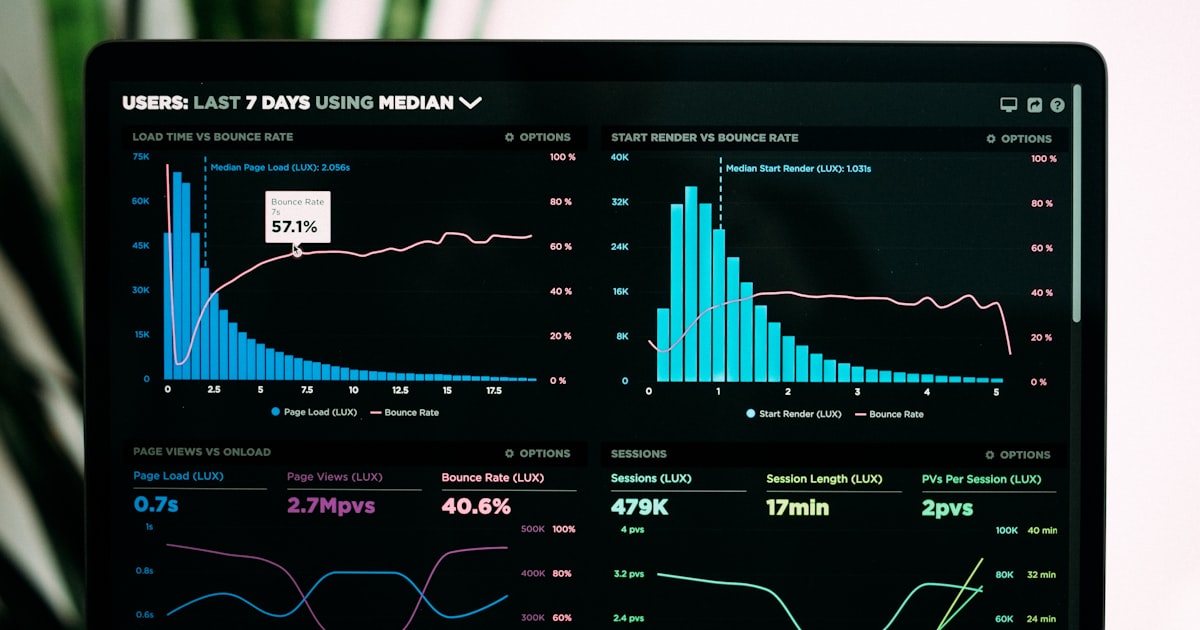
Why Video Analytics Decides Whether Your Content Budget Survives 2026
Video analytics is the discipline of turning every play, pause, scroll, and click into evidence that your video program is moving revenue, not just attention. Most teams produce video and report on views. The teams that keep their budgets do something different. They connect video analytics to pipeline, treat the metric stack as a measurement system rather than a scoreboard, and can answer one question without hesitation: what did this video do for the business. That question is getting harder to dodge. Buyers research in private, attention is fragmented across a dozen surfaces, and finance has stopped accepting "it got a lot of views" as a result. This guide breaks down the metrics that matter, the difference between vanity and actionable signals, how platform-native analytics on YouTube, LinkedIn, and Meta actually behave, how attribution works when nobody clicks, how to build a dashboard people use, and how to tie video to revenue you can defend in a board meeting.
We make AI-first cinematic video at Neverframe, and we build every asset to be measured. That bias shapes this guide. We are not interested in production for its own sake. We are interested in video that you can trace to a number that matters.
The Video Analytics Stack: From Plays to Pipeline
Before listing metrics, it helps to see how video analytics is layered. Each layer answers a different question, and confusing them is the single most common reason video reporting collapses under scrutiny.
- Delivery layer. Did the video reach people. Impressions, reach, unique viewers. This tells you about distribution, not performance.
- Attention layer. Did people watch. Watch time, average view duration, completion rate, view-through rate. This is where most useful signal lives.
- Engagement layer. Did people respond. Likes, comments, shares, saves, click-through rate. Useful, but easy to game and easy to misread.
- Action layer. Did people do something with commercial value. Landing page visits, form fills, demo requests, trials, sales.
- Revenue layer. Did the program produce money. Influenced pipeline, sourced pipeline, conversion rate by stage, return on investment.
A healthy video analytics practice reads all five layers together. A weak one stops at the attention or engagement layer and hopes nobody from finance asks about the bottom two. The whole point of modern video analytics is to make the climb from a play event to a closed deal traceable, even when the path is messy.
According to Wyzowl's annual State of Video Marketing report, the large majority of marketers say video gives them a positive return on investment, yet far fewer can show the working behind that claim. That gap, between belief and evidence, is exactly what a real video analytics stack closes.
The Video Analytics Metrics That Actually Matter
Here is the working set. For each, what it is, what it tells you, and roughly where it should land. Benchmarks vary by platform, audience, and format, so treat these as orientation, not law.
| Metric | Funnel stage | What it tells you | Rough benchmark |
|---|---|---|---|
| View-through rate (VTR) | Delivery to attention | Share of served impressions that became a qualifying view | 15 to 45 percent for in-stream, higher for owned audiences |
| Average view duration | Attention | How long the average person actually watched | Aim for 50 percent or more of total length |
| Watch time (total) | Attention | Aggregate minutes consumed, the metric platforms optimize on | Higher is better, judge against your own trend |
| Completion rate | Attention | Share who watched to the end | 15 to 30 percent for long form, 40 to 70 percent for short |
| Engagement rate | Engagement | Likes, comments, shares, saves over reach | 2 to 6 percent is solid on most platforms |
| Click-through rate (CTR) | Engagement to action | Share who clicked a link or card | 0.5 to 2 percent paid, higher for warm owned audiences |
| Conversion rate | Action | Share who completed the goal action after clicking | 2 to 5 percent on a focused landing page |
| Cost per view / cost per completed view | Efficiency | What attention costs you | Track the trend, optimize down over time |
| Influenced pipeline | Revenue | Pipeline value where video touched the journey | Report as share of total influenced pipeline |
| Return on investment (ROI) | Revenue | Revenue or pipeline value over production and distribution cost | Positive and rising quarter over quarter |
View-through rate, the most misunderstood metric
View-through rate is the percentage of impressions that turned into a qualifying view. The trap is that "qualifying view" means different things on different platforms. A YouTube view in an ad context can require thirty seconds or an interaction. A Meta view can be counted at three seconds. A LinkedIn view threshold differs again. If you compare raw VTR across platforms without normalizing the definition, you are comparing things that are not the same. Good video analytics always footnotes the definition. We will come back to this when we cover platform-native analytics, because it is the number one source of bad cross-channel conclusions.
Watch time and average view duration
Watch time is the metric the algorithms care about, because total minutes consumed is what keeps a platform's users on the platform. Average view duration is the human-readable version, how long the typical viewer stayed. If your average view duration is collapsing in the first ten seconds, no amount of distribution budget will save the asset. Fix the open. The data will tell you exactly where people leave if you read the retention curve, which is the single most underused chart in any video analytics dashboard.
Completion rate
Completion rate rewards discipline. Short, tightly edited video earns high completion. Long video earns lower completion but can earn more total watch time and deeper intent. Neither is wrong. The error is judging a fifteen minute explainer by the completion benchmark of a fifteen second hook. Match the benchmark to the format.
Click-through rate and conversion rate
CTR and conversion rate are where attention starts to look like business. A high CTR with a low conversion rate usually means the video promised something the landing page did not deliver. A low CTR with a high conversion rate means the few who click are highly qualified, which can be exactly what a B2B program wants. Read them as a pair, never alone.
Influenced pipeline and ROI
These are the two numbers that decide budgets. Influenced pipeline is the value of opportunities where video appeared somewhere in the journey. ROI is the return on what you spent to produce and distribute. We treat these as the output of the entire video analytics stack, and we design assets backward from them. If you cannot draw a line from an asset to one of these two numbers, you are producing on faith.
Vanity Metrics Versus Actionable Metrics
Every metric is data. Not every metric is a decision input. The fastest way to mature a video analytics practice is to sort the metric stack into vanity and actionable, then build reporting around the actionable column.
A metric is vanity when it goes up reliably with spend or reach but does not predict business outcomes. A metric is actionable when a change in it should change what you do next.
- Vanity: raw view count, total impressions, follower count, total likes. They feel good and rise with budget. They rarely move a forecast.
- Actionable: retention curve shape, average view duration, qualified CTR, conversion rate by source, influenced pipeline, cost per qualified action.
View count is the classic example. A million views means nothing if the video targeted the wrong audience and produced zero qualified actions. Ten thousand views from exactly the right accounts that produced forty demo requests is a far better result. Mature video analytics ranks the second outcome higher every time, and the reporting reflects it.
This does not mean you delete vanity metrics. Reach and impressions are real, and you need them to calculate rates. The discipline is contextual. Vanity metrics belong in the denominator, supporting the rates that actually matter. They do not belong at the top of a board slide as the headline. HubSpot's research on marketing measurement makes the same argument across channels: the metrics worth reporting are the ones tied to revenue and decisions, not the ones that simply trend up. Our strategy guidance in the complete video content strategy guide goes deeper on building a measurable content plan from the first brief.
Platform-Native Analytics: YouTube, LinkedIn, and Meta
Every major platform ships its own analytics, and each defines its terms differently. You cannot run cross-channel video analytics until you understand what each platform is actually counting.
YouTube analytics
YouTube is the most mature video analytics environment available to most teams, because YouTube is search and library as much as it is social. The metrics that matter most:
- Watch time and average view duration. YouTube optimizes on watch time, so this is your primary attention signal.
- Audience retention curve. The retention graph shows exactly where viewers drop. Spikes can indicate replays or strong moments. Cliffs indicate problems. This is the most actionable chart YouTube gives you.
- Impressions and impressions click-through rate. How often your thumbnail was shown, and how often it earned the click. A strong CTR on the thumbnail with weak retention means your packaging is overselling the content.
- Traffic sources. Whether views come from search, suggested, browse, or external. Search and suggested traffic signal durable, compounding distribution. This is why video built for search behaves like an asset rather than a campaign, a theme we cover in the video SEO ranking guide.
- Unique viewers and new versus returning. Whether you are building an audience or renting attention.
LinkedIn analytics
LinkedIn video analytics is leaner but commercially dense, because the audience skews toward the buyers and decision makers B2B programs want.
- Video views with a defined threshold. LinkedIn counts a view at a specific watch threshold, so its view number is not comparable to a YouTube view or a Meta view without normalization.
- View rate and watch time. How far into the video the average professional stayed.
- Engagement by audience attributes. LinkedIn shows demographics: job title, seniority, company, industry. For B2B this is the most valuable layer LinkedIn offers, because it tells you whether the right people are watching, not just how many.
- Click-through to destination. The bridge from attention to action.
The reason LinkedIn matters disproportionately for B2B video analytics is the demographic breakdown. A modest view count from senior buyers at target accounts is worth far more than a large view count from an audience that will never buy. If you sell to businesses, this is your highest-signal native analytics surface, and our B2B video marketing strategy guide builds an entire program around it.
Meta analytics
Meta, covering Facebook and Instagram, gives you reach at scale and the loosest view definitions, which is both its strength and its trap.
- 3-second and ThruPlay views. Meta's default view counts are generous. ThruPlay, completion of fifteen seconds or the full video if shorter, is a more honest attention metric. Report ThruPlay, not three-second views, if you want a number you can trust.
- Average watch time and retention. Available per asset and worth reading just like YouTube retention.
- Reach and frequency. How many unique people and how often. Frequency creeping high signals audience fatigue.
- Cost per ThruPlay and cost per result. The efficiency metrics that matter when you are paying for distribution.
The practical takeaway across all three: never put YouTube, LinkedIn, and Meta view counts side by side in a single chart without labeling the definition behind each. The numbers look comparable. They are not. This single discipline separates credible video analytics from the kind that gets quietly dismissed by anyone who understands the platforms.
Attribution: Measuring Video When Nobody Clicks
Attribution is the hard part of video analytics, and it is hard for a structural reason. Video does its most important work in the part of the journey where there is no click. Someone watches a brand film, says nothing, clicks nothing, and three weeks later searches your name and converts. A naive last-click model gives all the credit to that final search and zero to the video that created the intent. That is how excellent video gets defunded.
You do not need perfect attribution. You need attribution that is good enough to defend a decision. Several models, used together, get you there.
The main attribution approaches
- Last-touch attribution. Credits the final interaction before conversion. Simple, available, and systematically blind to upper-funnel video. Use it, but never alone.
- First-touch attribution. Credits the first interaction. Better for awareness video, but ignores everything that nurtured the deal.
- Multi-touch attribution. Distributes credit across every touch in the journey. The most honest model for video, and the most data-hungry. Worth the effort when you have the tracking to support it.
- Influenced pipeline. Rather than dividing credit, count any opportunity where video appeared in the journey as influenced. Less precise, but extremely persuasive in a budget conversation, because it shows video's footprint across real revenue.
- Self-reported attribution. Add "how did you hear about us" to forms. Imperfect, biased, and still one of the most useful signals for video, because it captures the dark social and word-of-mouth that no tracking pixel can see. Think with Google's research on the messy middle describes exactly why the buying journey resists clean click tracking, and why blended measurement beats any single model.
A practical attribution stack for video
You do not have to choose one model. Run a blend:
- Use multi-touch or influenced pipeline as your primary commercial story.
- Use self-reported attribution to catch the dark social that pixels miss.
- Use incrementality tests when the stakes justify it. Hold out a region or audience, run video everywhere else, and measure the difference in pipeline. This is the closest thing to proof that video caused an outcome rather than merely correlating with it.
- Use engagement-to-pipeline matching. Tie known viewers, from LinkedIn engagement or gated plays, to accounts in your CRM. When a watched account becomes an opportunity, that is your cleanest direct line from video to revenue.
The goal is not a single perfect number. The goal is a coherent case that survives a skeptical question. Video analytics that admits its own uncertainty and triangulates across models is more credible than a single tidy figure that falls apart under scrutiny. We expand on the full revenue picture in the complete video marketing ROI guide.
Building a Video Analytics Dashboard People Actually Use
A dashboard is not a data dump. It is an argument. The best video analytics dashboards answer three questions on a single screen: is the program working, what is working within it, and what should we do next.
Design principles
- One audience per view. The dashboard a creative team needs (retention curves, hooks, completion by format) is not the dashboard a CFO needs (influenced pipeline, ROI, cost per qualified action). Build separate views. Forcing both audiences into one screen serves neither.
- Rates over raw counts. Lead with view-through rate, conversion rate, and cost per action, not with raw views. Rates are comparable over time and across assets. Raw counts mostly track how much you spent.
- Trend over snapshot. A single number is noise. The direction over the last several periods is signal. Every key metric should show its trend, not just its current value.
- Tie every section to a layer. Structure the dashboard around the five-layer stack: delivery, attention, engagement, action, revenue. When something drops, the layered structure tells you immediately where in the funnel it broke.
A minimum viable executive view
For the people who control budget, keep it brutally short:
- Influenced pipeline from video this period, and the trend.
- Return on investment, video value over total video cost.
- Cost per qualified action, trending down if the program is improving.
- Top three assets by influenced pipeline, with one line each on why they worked.
That is enough to make a budget decision. Everything else is diagnostic detail that belongs in the operator's view, not the executive's. The discipline of separating the two is what makes a video analytics dashboard get opened in week two instead of abandoned.
Tooling reality
You do not need an expensive platform to start. A blend of the native analytics from each channel, your video hosting analytics for owned content, your CRM for the revenue layer, and a single rolled-up sheet or BI view is enough for most teams. The constraint is rarely the tool. It is the discipline to define metrics consistently, normalize platform definitions, and update the view on a fixed cadence. Buy a heavier platform only when the manual blend genuinely cannot keep up.
Tying Video to Revenue
This is the whole point. Every layer above exists to support one outcome: a defensible link between video and money. Here is how the strongest video analytics programs build that link.
Start from the revenue question, not the asset
Most teams produce a video and then ask how to measure it. Reverse that. Before production, decide which business number this asset is meant to move: pipeline created, deal velocity, conversion rate at a specific stage, expansion revenue. Then design the asset and its tracking to serve that number. Measurement built in at the brief stage is real. Measurement bolted on after publish is theater. This is why we build production backward from the metric at Neverframe, and why we plan distribution before we shoot, a discipline we detail in the video distribution strategy guide.
Connect video to the CRM
Revenue lives in your CRM, so your video signal has to reach it. The connections that matter:
- UTM discipline. Every video link carries consistent campaign tags so clicks land in your CRM attributable to the asset.
- Form source capture. Lead forms record the source so video-driven conversions are tagged at the moment they happen.
- Engagement-to-account matching. Known viewers from LinkedIn or gated plays map to CRM accounts, so you can see when watched accounts move through stages.
- Pipeline tagging. Opportunities carry a flag when video touched the journey, which is what makes influenced-pipeline reporting possible at all.
Calculate ROI honestly
ROI is revenue or pipeline value attributable to video, divided by the fully loaded cost of producing and distributing it. Honest ROI includes production, distribution spend, and the team time behind it. The frequent mistake is counting only media spend and ignoring production cost, which inflates the number until the first person who knows the real budget calls it out. Credible video analytics uses the real, loaded denominator. A smaller, defensible ROI beats a large, fragile one every time.
The market is moving in this direction whether teams are ready or not. Grand View Research projects the video production and broader digital video market to keep expanding sharply through the decade, which means more video, more spend, and more scrutiny on what that spend returns. As coverage in outlets like Forbes on marketing measurement repeatedly notes, the budgets that survive are the ones with a measurement story behind them. The teams that win the next budget cycle will be the ones whose video analytics already answer the revenue question before it is asked.
Reinvest based on what the data says
The final loop closes when analytics drives the next production decision. The retention curve tells you which openings hold attention, so you script the next hook accordingly. Influenced-pipeline data tells you which formats and topics move deals, so you make more of those and fewer of the assets that only earned views. Cost-per-qualified-action trends tell you which channels deserve more distribution budget. This is the compounding advantage of disciplined video analytics: every asset makes the next one smarter, and the program gets more efficient over time instead of just bigger. Reusing and recutting your highest-performing assets across formats, which we cover in the video repurposing guide, multiplies that compounding effect without multiplying production cost.
A Practical 90-Day Rollout
If you are starting from view-count reporting and want to reach revenue-grade video analytics, here is a realistic sequence.
- Days 1 to 30. Define and normalize. Write down your metric definitions. Decide what a qualifying view means on each platform. Set up UTM discipline and form source capture. Pick the four executive metrics you will report. Stop reporting raw views as a headline.
- Days 31 to 60. Connect to revenue. Wire video sources into the CRM. Start tagging influenced pipeline. Add self-reported attribution to your main forms. Build the two dashboard views, operator and executive. Begin reading retention curves on every published asset.
- Days 61 to 90. Prove and reinvest. Run one incrementality or holdout test if your volume supports it. Report your first influenced-pipeline and honest ROI numbers. Use the retention and pipeline data to brief the next batch of production. Kill or rework the assets that earned attention but no action.
By day ninety you will not have perfect attribution, because nobody does. You will have something more useful: a measurement system that connects video to revenue, a dashboard people open, and a production process that gets smarter every cycle.
What Strong Video Analytics Actually Buys You
Done well, video analytics changes the conversation. You stop defending video as a cost and start presenting it as a measurable contributor to pipeline. You stop guessing which assets work and start knowing. You stop reporting views to people who do not care about views and start reporting influenced pipeline and ROI to people who control budget. And you stop producing on faith, because every asset now traces to a number that matters.
The metrics that matter are the ones tied to action and revenue. The dangerous ones are the vanity metrics that rise with spend and predict nothing. Platform-native analytics are powerful as long as you respect that each platform counts differently. Attribution is imperfect, so triangulate rather than chase a single perfect number. Dashboards are arguments, so build them for the audience that will act on them. And revenue is the point, so design measurement in from the brief, not after the upload.
At Neverframe we build AI-first cinematic video that is engineered to be measured against pipeline, not applause. Every asset starts with the business number it is meant to move and the tracking that will prove it moved. If you want video that earns its place in the budget because the analytics make the case for you, talk to us at neverframe.com. We will help you produce work that looks like cinema and reports like a revenue line.
Work with Neverframe. If you want this executed rather than explained, talk to the studio or see what we make. Up to 30% off your first project with us.