Text to Video AI: Complete Guide
Text to video AI lets brands generate cinematic clips from a prompt. How it works, where it wins, and how to direct it for results in 2026.
Published 2026-06-12 · Technology · Neverframe Team
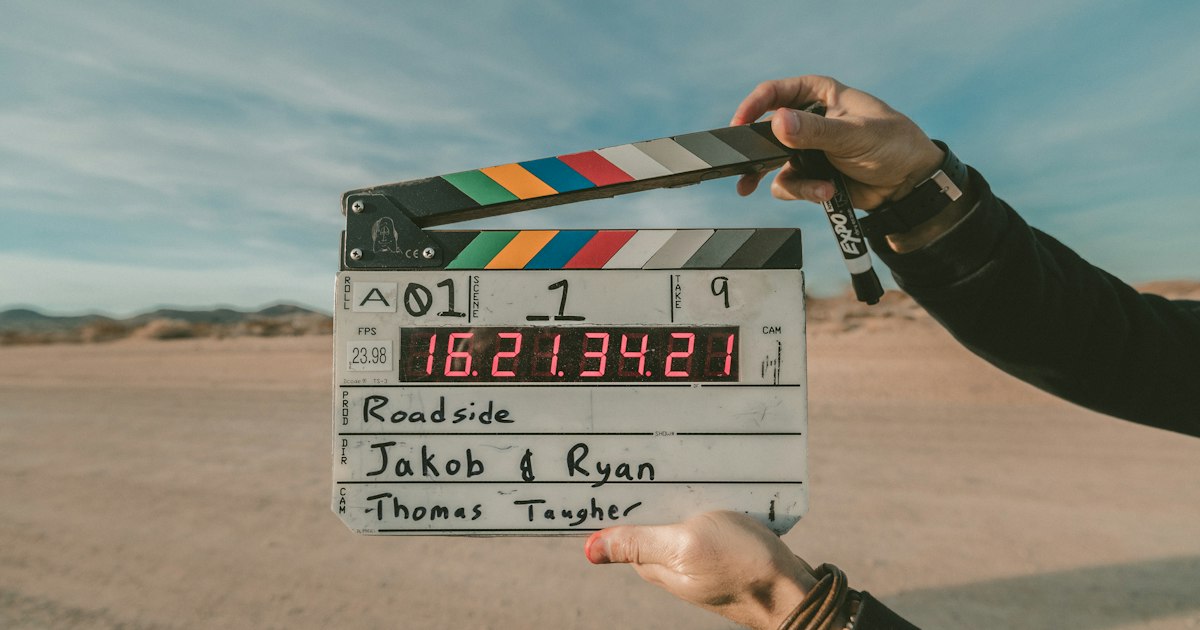
Text to Video AI: The Complete Guide for Brands in 2026
Text to video AI has gone from a research-lab curiosity to a production reality in under three years. A marketer can now type a paragraph and watch a usable, broadcast-adjacent clip render in minutes, not weeks. For brands that spend their lives waiting on production calendars, that shift is not incremental. It rewrites the economics of every video they make.
The market reflects the urgency. The global AI video generator market was valued at over $554 million in 2023 and is projected to grow at a compound annual rate above 19% through the early 2030s, according to Grand View Research. Meanwhile, Wyzowl's annual video survey reports that 95% of marketers consider video a core part of their strategy, and the single biggest barrier they cite is time. Text to video AI attacks that barrier directly.
This guide explains how text to video AI actually works, where it is strong, where it still breaks, and how a brand should think about deploying it without producing a library of generic, forgettable clips. At Neverframe, we build cinematic AI video for companies that refuse to look like everyone else, so our bias is explicit: the tooling is only as good as the creative direction behind it.
What Text to Video AI Actually Means
Text to video AI describes any system that takes a written prompt and generates moving footage from it. You describe a scene, a subject, a mood, a camera move, and the model synthesizes frames that match. There is no camera, no set, no actor, and no editing timeline in the traditional sense.
Under the hood, most modern text to video AI systems are diffusion models trained on enormous datasets of captioned video. The model learns the statistical relationship between language and motion, then denoises random noise into coherent frames conditioned on your prompt. The practical result is that the same instruction that once briefed a director and crew now briefs a model.
It is worth separating text to video from adjacent techniques that brands often confuse with it. Text to video starts from words alone. Image to video starts from a still frame and animates it, which we cover in our image to video AI guide. Avatar and lip-sync systems start from a person and a script, which sit closer to our work on AI avatar video for business. All three belong to the same family, but they solve different problems.
Why 2026 Is the Inflection Point
Three things changed at once. Model quality crossed a threshold where clips hold temporal consistency for several seconds without the melting, flickering artifacts that defined earlier generations. Clip length extended from two seconds to durations long enough to carry a real shot. And control improved, so prompts can now specify camera movement, lens character, and lighting with some reliability rather than pure chance.
For brands, the consequence is simple. Text to video AI is no longer a novelty for social experiments. It is a viable production input for ads, explainers, and social content when paired with deliberate creative oversight.
How Text to Video AI Works, Step by Step
Understanding the pipeline helps you brief it well. A vague prompt produces vague footage, and the gap between amateur and professional output is almost entirely in the instruction layer.
The first step is prompt construction. A strong prompt names the subject, the action, the environment, the time of day, the camera behavior, and the visual style. "A woman drinks coffee" yields generic footage. "A woman in her late thirties sips espresso at a sunlit Roman cafe, slow dolly-in, shallow depth of field, warm morning light, anamorphic lens flare" yields something you can actually use.
The second step is generation. The model renders a clip, usually a few seconds long, at a chosen resolution and aspect ratio. Most professional workflows generate multiple variations of the same prompt, because diffusion models are probabilistic and the best take is rarely the first.
The third step is selection and refinement. You review variations, pick the strongest, and either regenerate with adjusted prompts or extend the clip. Many platforms now support extending an existing clip so a three-second shot becomes a seven-second shot while preserving the subject.
The fourth step is assembly. Individual generated clips become a finished video through editing, sound design, color grading, and pacing. This is the step most brands underestimate. Raw generations are ingredients, not meals.
The Prompt Is the New Brief
The most important mental shift for marketing teams is that prompting is creative direction, not data entry. The people who get cinematic results from text to video AI are the ones who think like cinematographers: they specify lens, movement, and light because they understand why those choices matter to the final emotion.
This is precisely why we argue that tooling alone does not democratize quality. Anyone can access the same models. The brands that stand out are the ones that bring real directorial intent to the prompt, which is the philosophy behind our complete AI video production guide.
What Text to Video AI Is Genuinely Good At
The technology has clear sweet spots in 2026. Used inside those zones, it delivers results that are difficult or impossible to match on traditional budgets and timelines.
High-volume social content is the most obvious win. Brands running performance marketing need dozens of creative variations to find what converts. Generating ten visual concepts for a campaign in an afternoon, rather than scheduling a shoot, changes how fast a team can iterate. We explore this volume game in depth in our faceless video content AI playbook.
Impossible or expensive scenes are another. A product floating through an abstract dreamscape, a city rebuilt as it looked a century ago, a microscopic journey through a material: these once required heavy VFX budgets. Text to video AI produces credible versions of them for a fraction of the cost.
B-roll and atmospheric coverage is a third. Establishing shots, textures, transitions, and mood inserts can be generated to match a specific tone rather than pulled from generic stock libraries that competitors also use. Our AI B-roll guide covers this use case specifically.
Rapid concept visualization rounds out the list. Before committing budget to a flagship production, teams can generate a moving mood reel that communicates intent to stakeholders far better than a static deck.
Where Text to Video AI Still Breaks
Honesty matters more than hype, because misplaced expectations are the fastest route to a wasted budget. Text to video AI has real limitations in 2026, and pretending otherwise produces disappointing campaigns.
Precise brand control remains hard. If your product has an exact shape, logo, and color, a pure text-to-video model will approximate it, not replicate it. For products that must appear accurately, image-conditioned workflows or hybrid live-action approaches are usually necessary.
Long, continuous narrative is still a challenge. Models excel at shots, not sequences. Maintaining a single character's exact appearance across a two-minute story with multiple scenes requires careful technique and often breaks. Character consistency tools help, but they are not yet flawless.
Fine text rendering inside the video is unreliable. Generated signage, labels, and on-screen words frequently come out garbled. Any legible text usually needs to be composited in afterward.
Human nuance at close range can still feel uncanny. Wide and medium shots of people are often convincing, but tight close-ups of faces in motion can drift into the uncanny valley, especially during speech. This is why dedicated lip-sync and avatar pipelines exist as a separate discipline.
The Realistic Mental Model
Treat text to video AI as an extraordinarily fast, slightly unpredictable second unit. It will give you stunning material outside the constraints above and frustrating material inside them. Professional teams design briefs around its strengths instead of fighting its weaknesses.
Text to Video AI vs Traditional Production
The comparison is not about which is better in the abstract. It is about matching the tool to the job. The table below frames the trade-offs that matter to a marketing leader making a budget decision.
| Dimension | Text to Video AI | Traditional Production |
|---|---|---|
| Time to first cut | Hours to days | Weeks to months |
| Cost per concept | Very low | High |
| Iteration speed | Near-instant | Slow and expensive |
| Exact brand fidelity | Limited | Full control |
| Impossible scenes | Easy | Costly VFX |
| Close-up human realism | Improving, imperfect | Native |
| Scalable variations | Excellent | Poor |
The strategic answer for most brands is not either-or. It is a hybrid model where AI generation handles volume, concepting, and impossible imagery while traditional or hybrid techniques handle hero moments that demand precision. We break this down further in our AI versus traditional video production comparison.
Building a Text to Video AI Workflow That Produces Quality
The difference between a brand that uses text to video AI well and one that produces forgettable filler comes down to process. A repeatable workflow turns a chaotic tool into a dependable production line.
Start with a creative brief, not a prompt. Define the message, the audience, the emotional target, and the brand codes before anyone touches a model. The brief is what keeps a hundred generated variations on-strategy instead of merely pretty.
Develop a prompt library specific to your brand. Document the lens language, color palette, lighting style, and motion vocabulary that express your identity, then encode them into reusable prompt templates. This is how you make AI output recognizably yours rather than generically AI.
Generate in volume, then curate ruthlessly. Expect to discard most generations. The professional standard is to generate many options and select few, the same way a photographer shoots hundreds of frames for one cover image.
Treat post-production as non-negotiable. Color grading, sound design, pacing, and editing are what separate a raw generation from a finished asset. The model gives you clay. A human still has to sculpt.
Build a review and brand-safety gate. Before anything publishes, a human checks for artifacts, accidental likenesses, garbled text, and off-brand drift. This governance layer is what makes AI video safe to run at scale.
A Practical 30-60-90 Day Rollout
In the first 30 days, audit your current video needs and identify the highest-volume, lowest-risk use cases, such as social variations and B-roll, then run controlled pilots. In days 30 to 60, build your brand prompt library and establish the review gate, measuring output quality against your traditional baseline. In days 60 to 90, integrate text to video AI into a defined slot in your content calendar and begin reallocating budget from generic stock and low-stakes shoots toward higher-impact hero work.
Industry Applications
Text to video AI lands differently across sectors, and the smartest deployments map the tool to each industry's specific content pressure.
Ecommerce and DTC brands use it to mass-produce ad creative for testing, generating lifestyle scenes and product-adjacent imagery at the pace performance marketing demands. The volume advantage is decisive when you are running dozens of concurrent tests.
SaaS and technology companies use it to visualize abstract concepts that have no physical form, turning data flows, security, and automation into compelling motion rather than literal screen recordings.
Media and entertainment teams use it for rapid pre-visualization and for generating stylized sequences that would otherwise sit beyond the budget line.
Agencies use it to compress concepting timelines, presenting clients with moving treatments instead of static boards and winning pitches on the strength of demonstrated vision.
Measuring Whether Text to Video AI Is Working
Adopting the technology is not a goal in itself. The point is business outcomes, so the metrics should be the same ones you already track, viewed through the lens of efficiency gained.
Track production velocity, meaning the number of finished assets per month and the time from brief to publish. A successful adoption should show a meaningful compression here. Track cost per asset and cost per concept tested, which should fall as generation replaces shoots for appropriate use cases.
Track creative performance, including engagement, watch time, and conversion rate on AI-assisted assets versus your historical benchmarks. The honest test is whether the audience responds, not whether the production was cheap. Track iteration depth, the number of variations you can now test per campaign, because the ability to test more is often where the real ROI hides.
Common Mistakes Brands Make
The failures are predictable, which means they are avoidable. The most common is treating the tool as a magic button, expecting finished films from a one-line prompt and abandoning the effort when the output looks generic. Quality requires direction and post-production, full stop.
The second is skipping brand codification, generating beautiful but anonymous footage that could belong to any company. Without a documented visual identity translated into prompt language, AI output regresses toward a bland mean.
The third is ignoring governance, publishing AI video without a review gate and exposing the brand to artifacts, accidental likenesses, or off-brand drift. The fourth is forcing the tool into its weak zones, demanding exact product replication or long continuous narratives that the technology does not yet handle well, instead of designing around its strengths.
Choosing and Combining Text to Video AI Models
The landscape of text to video AI models has fragmented into specialists rather than a single winner, and the brands that get the best results treat model selection as a creative decision rather than a procurement one. Different models have different temperaments. Some excel at photorealistic human movement, some at stylized or animated aesthetics, some at sweeping camera dynamics, and some at tight, controllable shots. Knowing the character of each is part of the craft.
The practical implication is that a serious production rarely relies on a single model. A campaign might generate its hero atmospheric shots in one system, its product-adjacent lifestyle imagery in another, and its motion B-roll in a third, then unify everything in post through color grading and sound. This multi-model approach mirrors how a film production hires different specialists for different scenes, and it consistently outperforms loyalty to one tool.
Evaluation should be hands-on, not spec-sheet-driven. The only reliable way to judge a model for your brand is to run your actual briefs through it and assess the output against your standard. Marketing analysts at McKinsey have repeatedly found that the organizations capturing the most value from generative AI are those that pair the technology with disciplined internal capability rather than treating it as plug-and-play. Text to video is no exception: the team's skill in directing and selecting matters more than which logo is on the model.
It also pays to track the rate of change. The models improve on a timeline measured in months, not years. A weakness you encounter today, a clip-length ceiling, a consistency problem, a control gap, may well be solved by the next release. Building a workflow that can swap in better models as they arrive, rather than hard-coding around one tool's quirks, keeps a brand on the frontier instead of locked into yesterday's limitations.
Cost and ROI of Text to Video AI
The economic case is what moves text to video AI from interesting to inevitable, but it deserves a more careful framing than "it's cheaper." The honest analysis compares total cost of a finished, on-brand asset, not the raw cost of a generation.
Traditional video production carries fixed costs that scale poorly: crew day rates, location fees, talent, equipment, and the long calendar that ties up internal teams. A single polished branded video can run from five to six figures and take weeks. Text to video AI collapses the variable cost of generating footage toward near zero, but it does not eliminate the cost of direction, curation, and post-production, which remain real and necessary. The savings are dramatic but not total, and pretending otherwise leads to disappointment.
Where the ROI becomes overwhelming is in volume and iteration. The marginal cost of the eleventh creative variation is trivial with AI and prohibitive with traditional production. For performance marketing, where success depends on testing many concepts to find the winners, this changes the math entirely. A brand that could previously test three ad concepts per quarter can now test thirty, and the lift from finding better-performing creative often dwarfs the production savings themselves.
The smartest budgeting approach reallocates rather than simply cuts. Money saved on routine, high-volume content gets redirected toward fewer, more ambitious hero productions and toward the human talent, directors, editors, brand strategists, who make the AI output exceptional. The brands that treat the savings as a chance to do better work, not just cheaper work, are the ones that build a lasting advantage.
A Realistic Production Scenario
To make the workflow concrete, consider how a mid-sized consumer brand might run a single campaign through text to video AI. The brand is launching a seasonal product and needs a hero concept film, a set of social variations, and atmospheric B-roll, all on a compressed timeline that a traditional shoot could not meet.
The team begins not in a model but in a brief. They define the emotional target, a sense of warmth and momentum, the brand codes, a specific palette and a slow, confident camera language, and the message hierarchy. Only then do they translate those decisions into prompt templates, encoding the lens character, lighting, and motion that express the brand. This upfront discipline is what keeps the dozens of generations that follow on-strategy rather than merely attractive.
For the hero concept film, they generate many variations of each intended shot, treating the model like a second-unit crew shooting endless takes. They curate ruthlessly, keeping perhaps one in eight generations, then assemble the selected shots into a sequence, add an original score and sound design, and grade the footage for a consistent, premium look. The raw generations were ingredients; the finished film is the product of human editing and direction.
For social, they exploit the volume advantage that traditional production cannot match, generating dozens of variations tuned to different hooks, formats, and platforms, then feeding them into performance testing to discover which concepts convert. For B-roll, they generate atmospheric coverage matched precisely to the campaign's tone rather than pulling generic stock that competitors also use.
The entire campaign moves from brief to finished assets in days, at a fraction of a traditional budget, while expanding the volume of testable creative by an order of magnitude. The savings are real, but the more important outcome is capability: the brand can now do things, test more, iterate faster, visualize the impossible, that were previously off the table entirely. That capability shift, not the cost line, is the strategic prize.
Work with Neverframe. If you want this executed rather than explained, talk to the studio or compare the production packages.
Frequently Asked Questions About Text to Video AI
Is text to video AI good enough for professional brand use in 2026? For the right use cases, yes. High-volume social content, B-roll, concept visualization, and imaginative imagery are well within reach of professional quality when paired with proper direction and post-production. Precise product replication and long continuous narratives remain better served by hybrid approaches.
Will it replace traditional video production? No, and that is the wrong frame. It replaces specific tasks, especially high-volume and impossible-to-shoot work, while traditional and hybrid production retains the edge for flagship moments demanding exact fidelity and human nuance. The future is a blend, not a replacement.
How long does it take to produce a finished video with text to video AI? Generating raw clips takes minutes. Producing a finished, on-brand asset, with curation, editing, sound, and grading, takes hours to a few days depending on ambition, compared to the weeks a traditional shoot requires.
What is the biggest mistake brands make? Expecting a one-line prompt to produce a finished film, and skipping the creative direction and post-production that separate professional output from generic AI filler. The tool is an instrument, not an autopilot.
How do we keep AI video on-brand? By codifying your visual identity, lens language, color, lighting, and motion, into reusable prompt templates and enforcing a human review gate before publication. Distinctiveness comes from direction, not from the model.
The Strategic Outlook
Text to video AI will keep improving on every axis that currently limits it: length, consistency, control, and realism. The brands that build the muscle now, the prompt libraries, the workflows, the review gates, will compound that advantage as the models get better. The ones that wait will face competitors who can produce ten times the creative volume at a fraction of the cost.
But the deeper truth is that as the tooling becomes universal, creative direction becomes the only durable differentiator. When everyone can generate footage, the brands that win are the ones with a point of view, a recognizable aesthetic, and the discipline to direct the machine rather than be impressed by it.
That is the entire premise behind Neverframe. We treat text to video AI as a cinematic instrument, not a shortcut, and we bring real directorial intent to every frame so that the output looks like your brand and no one else's. If your team is ready to move from experimenting with AI video to producing it at a level that actually competes, Neverframe builds the system, the creative, and the output. Explore what cinematic AI video production can do for your brand and let us help you make text to video AI a genuine advantage rather than a source of generic content.
The companies that master this now are not just saving money. They are building a production capability their competitors cannot match. The question is no longer whether text to video AI belongs in your strategy. It is whether you will direct it well enough to stand out.