Professional Video Production
What professional video production actually delivers, how to evaluate quality, and what to expect at each budget tier - from 5K to 200K+.
Published 2026-04-07 · AI Video Production · Neverframe Team
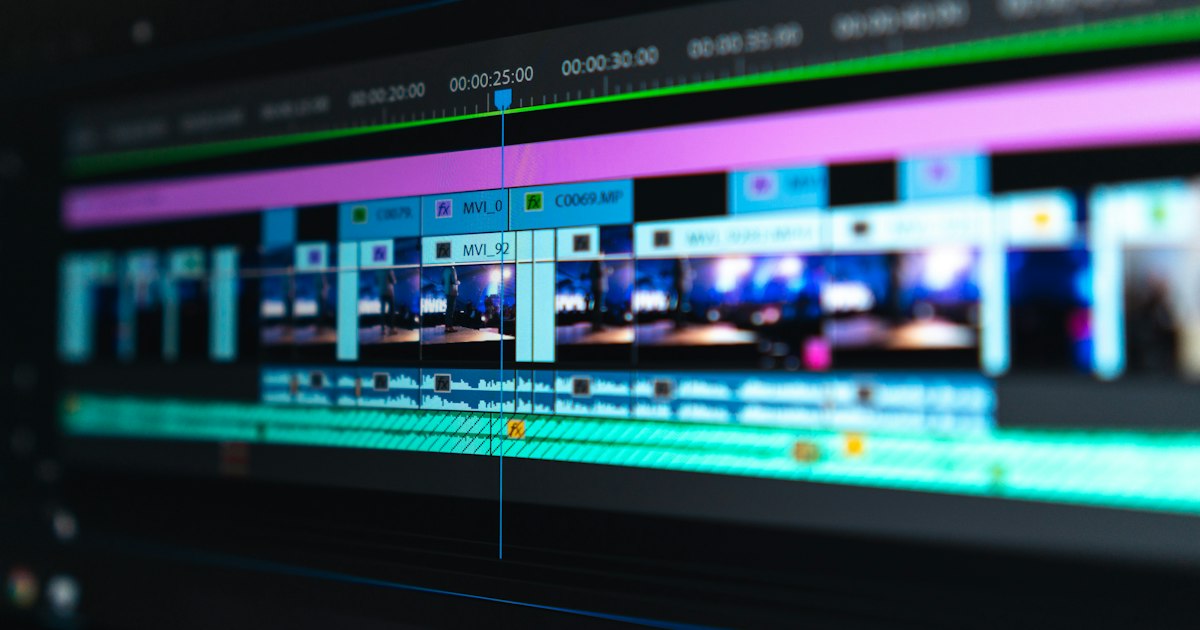
Professional video production is a significant investment. For most businesses, it's also one of the most effective ones. Done right, a professionally produced video can outperform written content, digital ads, and static visuals by a wide margin. Done wrong, it drains budget and delivers little in return.
This guide breaks down what professional video production actually involves, what separates it from low-budget alternatives, how to evaluate quality, and what you should realistically expect to pay and receive at each tier.
What "Professional" Actually Means in Video Production
The word "professional" gets applied loosely in video production. Every freelancer with a camera and a MacBook calls their work professional. So does every boutique studio and every large agency. The term has been diluted to the point of being almost meaningless.
What professional video production actually delivers is a combination of technical quality, narrative clarity, and production reliability. Each of these components matters independently, but all three together are what distinguish work that performs from work that merely exists.
Technical quality covers image resolution, color grading, audio fidelity, lighting design, and motion stability. A video shot at 4K with flat, lifeless lighting and muddy audio is not professionally produced in any meaningful sense, regardless of the camera used.
Narrative clarity means the video communicates a specific message to a specific audience in a way that drives a specific action. This is where most low-budget productions fail. They look acceptable on screen but leave the viewer without a clear sense of what to do next or why they should care.
Production reliability refers to the systems, processes, and team structures that ensure the project ships on time, on budget, and matches what was scoped. A single skilled freelancer can produce technically excellent footage, but a production company with defined workflows, redundant equipment, and experienced crew can do it consistently, at scale, with predictable results.
The Core Team Behind a Professional Video Production
Understanding who is on a professional production gives you a clearer picture of where costs come from and what you're actually paying for.
Producer: The producer owns the project from brief to delivery. They manage the budget, coordinate the crew, communicate with the client, and make sure every moving part stays on track. On smaller productions, this role often overlaps with director or account management.
Director: The director is responsible for the creative vision. They work with the client to understand the objective, translate that into a shot plan and visual approach, and guide the performance of on-screen talent. The director's experience is one of the biggest differentiators between production companies at different price points.
Director of Photography (DP): The DP manages the camera and lighting. They work closely with the director to translate the visual brief into actual images. A skilled DP can make an average location look cinematic. An unskilled one can make an expensive location look flat.
Production Coordinator: On larger shoots, a coordinator manages logistics, permits, call sheets, vendor bookings, and the dozens of details that keep a production day running without incident.
Editor: Post-production editing is where raw footage becomes a coherent story. A professional editor understands pacing, rhythm, and how to structure a sequence that keeps viewers engaged. This is not the same skill as knowing how to use editing software.
Sound Designer and Colorist: These specialists handle audio mixing and color grading respectively. Both are finishing roles that significantly affect perceived quality. Skipping them or treating them as optional is a reliable way to produce video that looks and sounds amateurish, even with strong source footage.
On a full professional production, this team can include 10 to 20 people. On a lean but skilled production, it might be five. The difference isn't just headcount. It's the depth of experience each person brings to their specific role.
Types of Professional Video Production
Professional video production covers a wide range of formats and applications. Understanding which type you need affects both your creative brief and your budget expectations.
Corporate Video Production: Internal communications, leadership messages, investor presentations, and company culture videos. These prioritize clarity and credibility over cinematic impact. Read more about what this involves in our corporate video production guide.
Commercial Video Production: TV spots, digital ads, social campaigns, and brand launch videos. These require strong creative concepting, often talent casting, and high production values. See our commercial video production guide for a full breakdown.
Brand Films: Longer-form narrative content that tells a company's story or communicates its values. Brand films typically run two to five minutes and are used on websites, at events, and in investor materials.
Product Videos: Demos, feature highlights, and purchase-driving content for e-commerce or SaaS. These are among the highest-ROI video investments for companies with products to sell. Our guide to product video for e-commerce covers this format in detail.
Training and Educational Videos: Internal onboarding, compliance training, and customer education content. These prioritize information architecture and instructional clarity over visual style.
Social Media Video: Short-form content for LinkedIn, Instagram, TikTok, and YouTube. Format requirements vary significantly by platform, and the production approach for each differs from traditional video.
Event Coverage: Conference documentation, product launches, award ceremonies, and live event recaps.
Each of these formats has distinct requirements for pre-production planning, crew size, shoot duration, and post-production complexity.
Pre-Production: Where the Real Work Happens
The quality of a final video is largely determined before a single frame is shot. Pre-production is where professional production companies earn their fees.
A thorough pre-production process includes a detailed creative brief, script or shot list development, location scouting or set design, talent casting, equipment planning, and a production schedule. For complex shoots, it may also include storyboarding, animatics, and technical recce visits.
The most common reason video productions go over budget or deliver disappointing results is inadequate pre-production. When the brief is vague, when locations are confirmed too late, when the script hasn't been properly reviewed, the problems compound on shoot day when time is most expensive.
Professional production companies invest significant time in pre-production because the alternative is costly on set. A single extra day of crew, talent, and equipment can easily cost $5,000 to $20,000 or more depending on the scale of the project. Spending an additional two weeks in pre-production to prevent that scenario is always the smarter choice.
Production: What Happens on Set
Shoot days are structured around efficiency. Every hour of crew time costs money, and professional productions are designed to minimize wasted time.
A typical commercial or brand video shoot might run one to three days. A simple product video might be shot in a half day. A multi-location corporate series might require a week of continuous production across different sites.
During the shoot, the director and DP are focused on capturing the footage against the shot list. The producer manages logistics, keeps the schedule, and handles anything that threatens to slow the production down. Talent is managed by the director. Equipment is monitored and adjusted by the DP and their team.
Professional crews work with backup equipment, redundant power supplies, and contingency plans for common shoot-day problems. This is one of the practical differences between professional production and freelance work. When a camera body fails on a freelance shoot, the day stops. On a professional production, a backup is ready within minutes.
Post-Production: Turning Footage into a Finished Product
Post-production on a professional video typically takes longer than the shoot itself. A one-day shoot might require two to three weeks of post-production to reach a finished, client-approved cut.
The post-production process includes editing, color grading, audio mixing, motion graphics or title design, music licensing, and final delivery in the required formats. Each of these stages requires specialist skills.
Editing is not just cutting footage together. It involves making decisions about story structure, pacing, emotional arc, and narrative clarity. The difference between a mediocre edit and a strong edit is often what determines whether a video actually performs.
Color grading establishes the visual tone of the piece. A skilled colorist can give footage a consistent, cinematic look that makes the brand feel premium and intentional. Uncorrected or poorly corrected footage looks cheap regardless of how it was shot.
Audio mixing ensures every element, voice, music, and effects, sits at the right level relative to everything else. This is a more technical discipline than most clients realize. Poor audio mixing is one of the fastest ways to undermine an otherwise well-produced video.
Motion graphics and titles add branded visual elements, lower thirds, transitions, and any animation elements. For many corporate and product videos, motion graphics are as important to the final look as the live-action footage itself.
At Neverframe, our post-production workflow uses AI-accelerated tools to significantly compress timelines without reducing the quality of the finished product. What used to take four weeks of traditional post-production we can often deliver in ten days. Contact our team to discuss your specific post-production requirements.
How to Evaluate Professional Video Production Quality
Before hiring a production company, there are specific things to look for when reviewing their portfolio.
Watch the first five seconds. The strongest productions grab attention immediately. If you find yourself scanning forward, the opening isn't working. This is a skill issue, not a luck issue.
Listen to the audio. Substandard audio is the most common sign of under-resourced production. If dialogue is muddy, if background noise is intrusive, or if the music is poorly mixed against the voiceover, the production company is cutting corners on sound.
Check the color consistency. Professional color grading maintains a consistent look across the entire video. Amateur or under-budgeted work often shows visible inconsistencies between shots.
Look at the transitions and pacing. Smooth, motivated editing keeps viewers engaged. Abrupt cuts, jumpy transitions, and awkward pacing are signs of an editor who hasn't fully developed their craft.
Read the script or listen for the message. Does the video say something specific and compelling? Or does it feel vague, generic, and interchangeable with any other company's video? Strong scriptwriting is rare and valuable.
Professional Video Production Costs: What to Expect
Professional video production costs vary significantly based on scope, format, and the market you're operating in. The numbers below reflect US market rates as of 2026.
Entry-level professional: $5,000 to $15,000. This range covers smaller productions with lean crews, basic locations, and standard post-production. Appropriate for simple product videos, short social content, and internal communications.
Mid-range professional: $15,000 to $50,000. This range covers full-crew commercial productions, brand films, and multi-location corporate videos with comprehensive post-production, music licensing, and multiple delivery formats.
High-end professional: $50,000 to $200,000+. Large-scale commercial campaigns, broadcast TV spots, major brand films, and productions requiring specialized equipment, A-list talent, or complex visual effects.
The single biggest driver of cost is time. Shoot days, crew hours, location fees, talent rates, and post-production hours all scale with the complexity of the project. For a detailed breakdown of how budgets are allocated across different project types, see our video production budget guide.
AI-assisted production, the approach Neverframe uses, can significantly reduce costs at the mid and high range without compromising the quality of the final product. By using AI tools in scripting, visual development, and post-production workflows, we can produce content that would traditionally cost $50,000 to $80,000 at a fraction of that price.
Questions to Ask Before Hiring
When evaluating production companies, the right questions reveal more than their portfolio alone.
How do you handle revisions? Professional companies have clear revision policies defined in their contracts. Unlimited revisions is a red flag. Two to three rounds with defined scope is standard.
Who will actually be working on our project? Some companies pitch with senior talent and deliver with junior crew. Ask specifically who will be directing and editing your video.
What happens if something goes wrong on shoot day? A professional company has a clear contingency protocol. A company that hesitates at this question doesn't have one.
Can you share references from similar projects? Portfolio work is curated. References from clients with similar needs are more revealing.
What does delivery include? Confirm the formats, resolutions, aspect ratios, and file types that will be delivered. Also confirm whether raw footage is included.
The ROI Case for Professional Video
The cost of professional video production is easiest to justify when you build the ROI case before the project starts. This means identifying specific, measurable outcomes you expect the video to influence.
For a product video, that might be conversion rate improvement on a specific product page. According to research from Wyzowl, 88% of people report being convinced to buy a product after watching a brand's video. If a product page converts at 3% without video and moves to 5% with video, the additional revenue from that single improvement can pay for the production multiple times over within a year.
For a brand film, the measurement is often softer, but the outputs are still trackable: time-on-site improvements, sales cycle acceleration, or reduced need for sales collateral in later-stage conversations.
For corporate communications, the ROI case is often built around efficiency. A well-produced training video can replace hours of live instruction, scale to unlimited employees simultaneously, and maintain consistency that in-person training cannot.
The underlying principle is the same across all formats. Professional video production is not an expense. It's a business asset with a calculable return.
Why AI Is Changing What's Possible at Every Budget
AI has created a structural shift in what professional video production can deliver at different price points. Tools for scriptwriting, visual development, automated editing assistance, and post-production acceleration have compressed timelines and reduced costs across the board.
This doesn't mean AI has replaced skilled production professionals. It means skilled professionals now have tools that multiply their output without reducing the quality of their work. A DP with AI-assisted pre-visualization can plan a shoot in half the time. An editor with AI-assisted rough cut tools can produce an initial cut faster, spending more time on the creative refinements that actually matter.
For clients, this means better access to professional-quality production at budgets that would previously have bought something significantly less impressive. For production companies that have built AI into their workflows, it represents a genuine competitive advantage.
Neverframe has been at the forefront of AI-integrated video production since the technology became production-viable. Our process combines the creative direction and craft of traditional high-end production with AI tools that eliminate the time costs that used to inflate budgets. The result is professional video at a new price point. See what we can do for your brand.
How to Brief a Professional Video Production Company
A strong brief is the fastest path to a strong result. A weak brief produces rounds of revisions, budget overruns, and eventual disappointment.
An effective brief includes: the primary objective of the video (what action you want the viewer to take), the target audience (specific and researched, not vague), the key message (one sentence), the tone and visual references, the budget range, the timeline, and the distribution plan.
Production companies should not have to extract this information from you through repeated questions. If you can't answer these questions clearly, spend more time on the brief before approaching vendors. Our video production process guide covers how to structure this from the client side.
Conclusion
Professional video production is defined by three things: technical quality, narrative clarity, and production reliability. It requires skilled teams, proper pre-production investment, and post-production disciplines that most low-budget alternatives skip.
The cost is real. So is the return, when the brief is clear and the execution is strong.
If you're evaluating options for your next video project, the standards in this guide give you a clear basis for comparison. And if you'd like to discuss what professional production looks like at a price point that works for your budget, Neverframe's team is ready to talk.
Understanding Video Production Contracts
Beyond the brief and the proposal, the contract is where project success gets protected legally. A professional video production contract covers a set of key provisions that every client should understand before signing.
Intellectual Property Transfer: This clause specifies when you receive full ownership of the finished video. Most professional contracts transfer IP upon final payment. This means you don't own the video until the final invoice is settled. Some contracts retain certain rights for the production company's portfolio use, which is generally acceptable as long as it's explicitly stated.
Kill Fee: If you cancel a project after pre-production has begun, the production company is entitled to compensation for the work already completed. A standard kill fee is 25% to 50% of the total contract value, depending on how far along the project has progressed. Understanding the kill fee structure before signing prevents unpleasant surprises.
Talent and Location Releases: The contract should specify who is responsible for obtaining releases from on-screen talent and property owners. Professional production companies typically handle this, but it's worth confirming explicitly.
Delivery Specifications: What file formats will be delivered, at what resolution, and through what channel (cloud delivery, hard drive, FTP) should all be specified. Vague delivery terms lead to post-project friction.
Change Order Procedure: When scope changes happen during production, the contract should define the procedure for authorizing and pricing additional work. Projects without a clear change order process tend to accumulate scope creep that ends in disputes.
The Difference Between Video Production and Videography
These terms are used interchangeably in some contexts but describe meaningfully different services. Understanding the distinction helps when evaluating your options.
Videography typically refers to a single operator with a camera who captures footage at an event, interview, or straightforward shoot. It's a technical recording service. A videographer might shoot a conference, a wedding, or a simple corporate interview.
Video production refers to the full spectrum of pre-production, production, and post-production services managed by a team with defined roles. It includes creative development, scripting, directing, multi-camera shooting, professional lighting and audio, and comprehensive post-production.
A videographer can produce excellent footage. A video production company produces a finished, strategically designed communication asset. The distinction matters when you're evaluating what you actually need. For a spontaneous event capture, a skilled videographer may be the right choice. For a campaign video, a product launch, or any content that needs to communicate a specific message and drive a specific action, production services are what the project requires.
Measuring Professional Video Production Results
Every professional video production investment should be attached to measurable outcomes. Setting those metrics before the project starts ensures you can evaluate ROI when the video launches.
For product and e-commerce videos: Track conversion rate on the specific page where the video is embedded, before and after launch. Also track average order value if the video covers multiple products.
For brand and awareness videos: Track time-on-site, bounce rate on the pages where the video appears, and direct traffic growth over the 90 days following launch.
For lead generation videos: Track form completion rates, qualified lead volume, and sales cycle length for leads that engaged with the video versus those that didn't.
For social media video: Track completion rate (what percentage of viewers watch to the end), share rate, and engagement rate by platform.
For internal communications and training: Track quiz scores or comprehension assessments pre and post-video, and measure reduction in support requests for topics covered by the training video.
These metrics don't require sophisticated analytics infrastructure. Google Analytics, most marketing automation platforms, and native social media analytics provide everything you need. Sprout Social's video marketing data consistently shows that completion rate and engagement are the strongest predictors of video content performance across platforms. The key is establishing the baseline before the video launches so you have a genuine before/after comparison.
Working with a Production Company on an Ongoing Basis
The economics of professional video production change significantly when you move from project-based relationships to ongoing production partnerships. Production companies that work with clients consistently develop deeper brand understanding, faster production cycles, and often provide preferential pricing.
For brands that need a consistent volume of video content, an ongoing relationship with a production company provides several practical advantages. The team understands your brand standards without needing to rebuild context on every project. They know your preferred approval process and revision style. They've shot in your locations and know your products. Each new project starts from a position of existing knowledge rather than from scratch.
Retainer arrangements are common for this type of ongoing relationship. Rather than scoping and contracting individual projects, the client pays a monthly fee for a defined volume of production services. The production company provides dedicated capacity, and the client benefits from predictable costs and faster turnaround.
Neverframe offers production partnerships for brands that need consistent, high-quality video output. If you're managing a content calendar that requires ongoing video production, our team can build a partnership structure that supports your volume at a sustainable cost.
Common Post-Production Mistakes That Undermine Professional Work
Strong production work can be undone in post-production when discipline drops. These are the mistakes that most commonly reduce the quality of professionally shot footage.
Over-editing: Adding too many transitions, effects, and visual treatments overwhelms the content. Professional editing is largely about what you leave out, not what you add. Clean cuts, matched pacing, and purposeful rhythm produce more polished results than technically complex editing.
Ignoring audio sync: When voice, ambient sound, and music fall out of sync even briefly, it destroys credibility. Audio sync issues are more damaging to viewer perception than almost any visual problem.
Inconsistent color grades: Footage shot on different days or in different lighting conditions needs careful color grading to maintain visual consistency. When the color shifts noticeably between sequences, the video looks unfinished.
Skipping the sound mix: Many productions get the edit right but deliver with a rough audio mix. Dialogue that's too quiet, music that overpowers the voice, and audio effects that are disproportionately loud all signal a lack of professional polish.
Leaving in technical errors: Jump cuts from incomplete takes, focus pulls mid-sentence, visible boom microphones, and reflections in glasses are all errors that should be caught in the edit. A quality control review before client delivery is standard professional practice.
Final Checklist Before Approving a Finished Video
When a production company delivers a finished cut for approval, review it systematically rather than watching it through once and approving. Use this checklist:
- Does the video open with something that grabs attention within the first three seconds?
- Is the primary message communicated clearly within the first 15 seconds?
- Is all dialogue or voiceover audible and well-mixed against the music?
- Does the color grading look consistent throughout?
- Are all text elements (lower thirds, titles, calls to action) free of spelling or grammatical errors?
- Does the pacing feel appropriate for the intended audience and channel?
- Is the call to action specific and visible?
- Does the video end cleanly?
- Are all the deliverable formats provided as specified?
- Has the video been reviewed by any stakeholders whose approval is required?
Approving a video without this level of review often results in post-delivery corrections that could have been caught earlier, adding time and sometimes cost to the final stages of the project.
Professional video production, done well, is one of the most durable marketing investments a business can make. The content you produce today can generate returns for years. Getting it right the first time is worth the investment in the process, the team, and the standards that make the difference.