Conference Video Production 2026
Conference video production playbook for B2B brands. Capture standards, crew structure, AI-augmented packaging and content engine model.
Published 2026-05-06 · Video Marketing · Neverframe Team
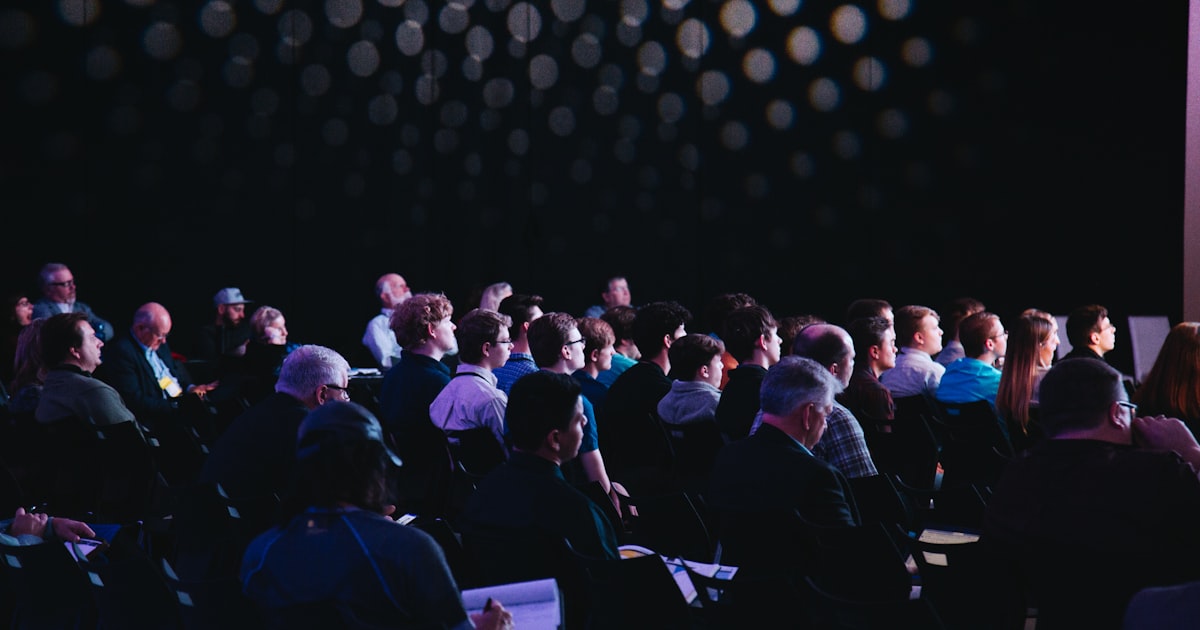
Why Conference Video Production Is the Most Underrated Strategic Investment in B2B Marketing
A conference is a content event disguised as a meeting. Industry video marketing research from Wyzowl confirms that buyers prefer video over written formats by a wide margin, which is exactly why conference content has so much downstream value. Companies invest substantial budget to bring their executives, customers, and prospects into a shared physical space, and the natural assumption is that the value is in the conversations and the deals. The hidden value is in the content captured during those days - the keynotes, the panel discussions, the customer interviews, the moments of genuine professional insight that happen on stage and off.
Conference video production is the discipline of capturing that content systematically and turning it into the editorial fuel that powers a year of marketing output. The brands that get this right walk away from each conference with twelve to eighteen months of content. The brands that do not still spend the same money to produce the conference but extract a fraction of the long-term value.
This guide covers the production discipline required to capture conference content at the quality needed for downstream use, the editorial choices that distinguish content that compounds from content that evaporates, the cost structures involved, and the AI-augmented production workflow that has changed what is possible from a single conference event.
What Conference Video Production Actually Covers
Conference video production is a multi-format discipline that spans event documentation, individual session capture, interview production, and post-event content packaging. Treating it as a single deliverable is the most common reason conference video programs underperform.
The conference recap or sizzle reel is the most visible deliverable. This is the two-to-three-minute highlight video that captures the energy of the event for post-conference distribution. Most conference video programs deliver this and stop there. The recap reel is necessary but barely scratches the surface of what the production investment can yield.
Session capture is the technical core. Every keynote, panel, and significant talk needs to be recorded at broadcast quality with synchronized slide capture, multi-angle camera coverage, and clean audio. The captured content becomes the source material for dozens of future deliverables - full-length session videos, short clips for social, audio podcasts, written transcripts, and B-roll for other content.
Interview production happens in parallel with the conference itself. While the main stage is running, a dedicated interview unit captures conversations with speakers, customers, and selected attendees in a controlled environment near the conference floor. These interviews become the highest-leverage content output from any conference, because they produce focused executive thought leadership content that would otherwise require dedicated production days throughout the year.
Atmospheric and B-roll capture documents the conference environment, the audience reactions, the networking moments, the booth interactions, and the architectural details of the venue. This footage becomes the visual texture that supports every other deliverable. A well-shot conference yields hundreds of hours of B-roll that can be deployed in marketing content for years afterward.
Post-event packaging is where most of the strategic value sits. This is the editorial work of taking the captured content and turning it into the content calendar that runs after the conference ends. Brands that allocate post-event production budget at the same level as the on-site capture extract dramatically more value than brands that treat post-event editing as an afterthought.
The Production Standards That Make Conference Video Worth Reusing
Conference video has a quality threshold below which the captured content becomes unusable for downstream marketing. The standards are not optional. Cutting corners on capture quality means the content cannot be reused at the production level the brand needs for ongoing marketing.
Camera coverage on every session has to include at least two cameras - typically a wide camera capturing the full stage and a tighter camera capturing the speaker. For panel discussions and high-importance keynotes, three or four cameras is the standard. The reason is that single-camera coverage produces footage that cannot be cut. Without cuts, the content cannot be edited into shorter clips for social, recap reels, or marketing assets. The rule of thumb is to capture at the multi-camera standard regardless of how the content will be used immediately, because future use cases will demand it.
Audio capture is the silent killer of conference video reuse. Stage audio has to be captured directly from the venue's sound board with a backup wireless lavalier on each speaker. Ambient room audio captured through camera microphones is unusable for broadcast. The audio chain has to be designed end to end before the conference begins. This is the single most common technical failure in conference video and it is unrecoverable in post-production.
Lighting control on stage is generally handled by the venue, but the production team has to validate that the lighting supports broadcast capture. Mixed color temperatures, harsh stage washes, or inconsistent levels across the stage create footage that requires expensive color correction and may still look unprofessional. A lighting walk-through before the event with the venue's AV team catches these issues early.
Synchronized slide capture is essential for sessions that include presentation material. The slides have to be captured as a separate video signal that can be intercut with the speaker footage in post. Capturing slides only through a camera filming the projection screen produces unusable content for downstream use. The technical setup is straightforward but requires advance coordination with the venue.
Interview unit production standards mirror the executive thought-leader video production standard described in our video production process reference. Three-point lighting, multi-camera coverage, lavalier audio with backup, and a controlled environment that filters out the conference-floor noise. The interview production has to feel like a studio shoot, not a hallway grab.
How Many People Does a Real Conference Video Production Require
The crew size question is where most brands underestimate conference video production. The minimum crew for a serious one-day conference with three breakout rooms is typically eight to twelve people. The actual size scales with the number of stages, the parallel session count, and the interview production volume.
The principal camera operators work in pairs per stage - one wide, one tight. For a conference with a main stage and three breakouts, that is eight camera operators. Each stage also needs a dedicated audio engineer pulling sound from the venue board. The interview unit requires a producer, a director, two camera operators, an audio engineer, and a hair and makeup person if executives are being interviewed. Add a production manager coordinating the schedule, a B-roll camera operator capturing the broader event, and a producer overseeing editorial coherence across the captured content.
This crew structure is non-negotiable for a conference that wants production-quality video output. Brands that try to compress this with smaller crews end up either missing critical content moments because they cannot cover the parallel sessions or producing content at quality below the threshold for downstream use.
The crew can be partially substituted with AI-augmented capture for some functions. Locked-off cameras with AI-driven framing can replace some of the human camera operators on simpler stages. Automated audio capture with redundancy can reduce the audio engineer headcount. But the interview unit cannot be automated away, and the principal cameras on important stages still require human judgment to capture the moments that matter.
What Conference Video Production Actually Costs
Conference video production costs break into three parts: on-site production, post-event editing and packaging, and equipment and travel.
On-site production is the largest cost. For a typical one-day conference at the production standards described above, the day rate for the full crew, equipment package, and on-site coordination ranges from twenty thousand to fifty thousand US dollars. Multi-day conferences scale roughly linearly. A three-day conference might cost sixty thousand to one hundred fifty thousand for on-site production alone.
Post-event editing and packaging is the variable cost that most brands underestimate. Producing a single recap reel from captured footage costs three thousand to eight thousand dollars depending on length and complexity. But the strategic post-event work - cutting individual sessions, producing executive interview videos, packaging short clips for social, creating B-roll libraries for future use - typically requires fifty thousand to one hundred fifty thousand dollars of post-production work to extract full value. Brands that allocate this budget produce twelve to eighteen months of content from a single conference. Brands that do not produce a recap reel and stop.
Equipment and travel costs depend on whether the production company has crew based near the venue or has to fly people in. For US conferences with a Los Angeles or New York based production company, travel can add ten to twenty percent to the total. For international conferences, travel costs can add thirty to fifty percent.
The total budget for serious conference video production at a single major conference typically lands in the range of one hundred thousand to three hundred fifty thousand dollars. This is a significant investment, but it should be evaluated against what the captured content produces over the following twelve to eighteen months. Brands that calculate the cost-per-deliverable of the resulting content library typically find that conference video production is one of the most cost-effective channels for producing executive thought leadership and customer story content. For a broader view of production economics, our video production budget guide covers comparable benchmarks.
How AI Has Changed Conference Video Production
The AI inflection in conference video production has been most impactful in post-event packaging, where the time and cost to extract full value from captured content has historically been the bottleneck.
Auto-transcription with speaker identification turns captured session footage into searchable text within hours. This used to require manual transcription that took days and cost thousands of dollars per session. The transcription becomes the foundation for every downstream editorial decision. Producers can search across all captured content for specific phrases, themes, or moments without watching every minute of footage.
AI-driven rough cut assembly proposes session edits, recap reel structures, and short-form clips automatically based on the captured material. The producer reviews and refines, but the heavy lifting of finding the most useful moments across hours of footage is automated. The time compression is substantial - what used to take a week now takes a day.
Generative B-roll fills gaps in captured material when the conference floor or venue did not yield enough visual texture for a specific deliverable. This is particularly useful for sessions where the captured content is heavy on talking heads and slide content but light on dynamic visuals.
Automated short clip generation produces social-format cutdowns from session content based on hooks, applause moments, or specific phrases that the producer flags. This used to require a junior editor to manually cut each social clip. The AI-augmented version produces three to five times more short-clip output from the same source material.
Voiceover generation enables production of recap reels, executive summary videos, and supporting content with synthesized narration that matches the brand's voice profile. For internal communications and B2B marketing use, AI voiceover has reached quality levels where the audience cannot distinguish it from human voice talent. Our analysis of AI vs traditional video production covers the production economics that drive these workflows.
The combined effect is that the post-event production budget that used to extract limited value from conference content can now produce two to three times the deliverable volume at the same cost, or the same deliverable volume at half the cost. This has shifted the strategic calculation for conference video production. The format is now significantly more cost-effective than it has historically been.
The Editorial Strategy That Compounds Conference Investment
The single biggest strategic shift in conference video production over the last few years has been moving from event-driven thinking to content-engine thinking. A conference is not just an event. It is a content production sprint that fuels twelve to eighteen months of marketing output.
The content engine model starts with editorial planning before the conference, not after. The producer maps every captured session to potential downstream use cases. Will this keynote become a thought-leadership clip series for LinkedIn? Will this customer panel become a multi-part interview series for the website? Will this product announcement become the foundation for a paid ad campaign? Pre-mapping these use cases shapes how the content gets captured. Cameras frame for the eventual cutdown. Interviewers ask questions that produce both the conference moment and the downstream clip. The conference is captured with the content engine in mind.
The post-event editorial calendar is the second pillar. The captured content gets sequenced across the following months according to a planned distribution schedule. Week one might feature the recap reel and three executive interviews. Week two might feature short clips from the most insightful keynote. Month three might feature a multi-part customer story series. The content drips out across the calendar rather than dropping all at once. This sustained release pattern compounds engagement and keeps the conference present in the audience's awareness for months after the event.
The cross-channel deployment plan is the third pillar. HubSpot research on video marketing shows that brands repurposing long-form content into multiple short-form assets see disproportionately higher ROI. The same captured content fuels LinkedIn video, paid social, sales enablement, partner channel content, internal communications, conference speaker reels for future events, and case study supporting material. The unit economics of conference video production only work when the content is deployed across all these channels. Brands that limit deployment to a single channel get a fraction of the value.
The repurposing rhythm extends across multiple conferences. A brand attending three conferences a year that maintains conference video production discipline at each event ends up with a perpetual content library that produces ongoing value. The marginal cost of each subsequent conference goes down as the production crew, the editorial framework, and the post-event packaging system mature. This is why brands that commit to conference video production as an ongoing program outperform brands that approach each conference as a one-off project.
Industry-Specific Considerations
Conference video production has industry-specific patterns that shape both the on-site capture and the post-event editorial.
In technology conferences, the production challenge is capturing both the speaker and the technical content being demonstrated on stage. Software demos, code walkthroughs, and product reveals all require synchronized capture of the speaker, the slides or demo screen, and audience reaction. The technical setup is more complex than for non-technology conferences and requires deeper coordination with the venue's AV team.
In financial services and professional services conferences, the editorial challenge is regulatory. Specific market commentary, performance claims, and product references often require legal review before they can be used in downstream marketing. The post-event editorial workflow has to include this review step, and the production has to capture content with potential legal review in mind.
In healthcare and life sciences conferences, similar regulatory constraints apply, plus additional considerations around patient privacy, compliance with promotional guidelines, and FDA-related claims. The pre-conference editorial brief needs to map what kinds of content can and cannot be used in which downstream contexts.
In creative and design conferences, the visual production standard is higher because the audience is explicitly evaluating production quality as part of their professional assessment. The crew structure typically includes additional camera coverage and post-production polish to meet audience expectations.
In B2B sales and marketing conferences, the highest-value content is often the off-stage interviews with attendees rather than the main-stage sessions. Allocating production budget toward the interview unit rather than toward additional session coverage produces better long-term content yield. Brands building B2B video marketing strategy programs frequently use conference interviews as their primary source of customer story content.
The Failure Modes - What Goes Wrong and How to Prevent It
Conference video production has predictable failure patterns. Most of them are operational rather than creative, and most of them are preventable with disciplined pre-production.
The audio fails on a critical session. This is the most common catastrophic failure. A keynote that loses audio cannot be recovered. The fix is redundant audio capture on every session - venue board feed plus wireless lavalier on each speaker plus a backup recorder. Three independent audio sources mean a single failure does not kill the content.
Footage from breakout rooms is unusable due to camera placement issues. Breakout rooms often have constrained sightlines, awkward speaker positioning, and inconsistent lighting. The fix is a venue walk-through during the pre-production phase with the production team, identifying camera positions and lighting requirements before the conference begins. Surprises on day one are catastrophic.
The interview unit is underbooked because schedules slip. Conferences run late. Speakers cancel. Customer interviews get pushed. The fix is overbooking the interview schedule by thirty to fifty percent and maintaining a flexible production team that can pivot when the schedule shifts. The interview unit should be treated as an opportunistic production unit rather than a rigidly scheduled one.
Captured content sits unused after the conference because no editorial plan exists. This is the most common failure in terms of value destruction. The fix is a written post-event editorial calendar approved before the conference begins, with specific deliverables, owners, and deadlines. Without this plan, the captured content goes into a content library and is forgotten.
The recap reel is delivered fast but everything else gets delayed. Production teams default to delivering the most visible deliverable first and then losing momentum. The fix is a phased delivery schedule with the recap reel followed by structured release of session videos, interview content, and short-form clips across the following weeks. Treating the recap reel as the only urgent deliverable produces a single-asset outcome from a multi-asset investment.
The captured content does not match the brand's visual system. Conference venues impose lighting, staging, and visual choices that may conflict with the brand's typical visual identity. The fix is establishing a brand-aligned color grade and visual treatment in pre-production that can be applied consistently across all delivered content. Without this discipline, conference video looks like generic event footage rather than branded content.
Legal and compliance review delays delivery. Particularly for regulated industries, the legal review cycle on captured content can stretch for weeks. The fix is engaging legal review during the post-event production rather than after delivery, building review checkpoints into the editorial calendar rather than treating compliance as a final gate.
Distribution and Long-Tail Value
The distribution strategy for conference video output is what separates brands that earn back their production investment from brands that do not. The captured content from a major conference can fuel content output across at least seven distinct channels, and the brands that systematically deploy across all of them produce dramatically better return on investment.
The conference recap reel works as a top-of-funnel content asset on social channels, on the company's website, and in email distribution to attendees and prospects who could not attend. Brands typically see substantial engagement on this asset in the two weeks immediately following the conference, with diminishing returns afterward.
Individual session videos work as middle-of-funnel educational content. Embedded on the website, distributed through email nurture sequences, and used as gating offers for lead generation, the full-length session videos provide ongoing value for months. A keynote from a quarterly conference can drive lead generation for the full quarter that follows.
Short-form clips from sessions and interviews fuel daily and weekly social posts across LinkedIn, Twitter, YouTube Shorts, and Instagram Reels. The volume of clips that a single conference yields is typically enough to support three to four social posts per week for two to three months. This is a substantial reduction in the production burden on the social media team.
Sales enablement integration is the highest-leverage internal use case. Account executives use specific session clips, customer interview moments, and product announcement footage during prospect conversations and proposal presentations. The integration into the sales workflow has to be designed and trained, but the impact on close rates is meaningful.
Conference speaker reels and submission packages are the recursive use case. The captured footage of executives speaking at one conference becomes the submission material for future speaking engagements. A strong speaker reel is the difference between conference organizers accepting or declining a speaker submission.
Internal communications use case turns customer-facing conference content into internal company-wide communications. All-hands presentations, employee onboarding materials, and team kickoff content all benefit from drawing on conference footage that captures the company's strategic narrative.
Partner channel and ecosystem distribution extends the reach of conference content beyond the brand's own audience. Partner companies that share customer audiences often welcome co-promotional content drawn from conferences, particularly when the content includes customer perspectives or industry insights that benefit both brands.
The long-tail value compounds with each subsequent conference. A brand that captures content systematically at four conferences over two years builds a content library that supports years of marketing output. The marginal cost of each new conference becomes increasingly justified by the accumulated content asset rather than just the immediate post-conference output.
What to Do Next
Conference video production has emerged as one of the highest-leverage marketing investments available to B2B brands, particularly when paired with a content engine model that extracts value from captured material across twelve to eighteen months of downstream marketing. The brands that have figured this out are pulling away from competitors who treat conferences as one-off events with a single recap deliverable.
If your team is producing conference video at the recap-reel level and frustrated by the limited downstream value, the issue is structural rather than creative. The capture standards, the crew structure, and the post-event editorial discipline all need to be designed around long-term content engine output rather than around the event itself.
Neverframe builds conference video production programs for B2B brands and event organizers that have decided to make their conferences a strategic content asset. We handle the full pipeline from pre-conference editorial planning through on-site multi-camera capture and AI-augmented post-event packaging, with production economics that justify the investment across the full content lifecycle. If you are evaluating partners for an upcoming conference, we would be glad to walk through the production model with you. Visit neverframe.com to start the conversation.