Cinematic Video Production Guide
When does cinematic video production make sense for a brand? Covers visual language, cost breakdown, AI augmentation, and briefing premium films.
Published 2026-04-25 · AI Video Production · Neverframe Team
What Is Cinematic Video Production?
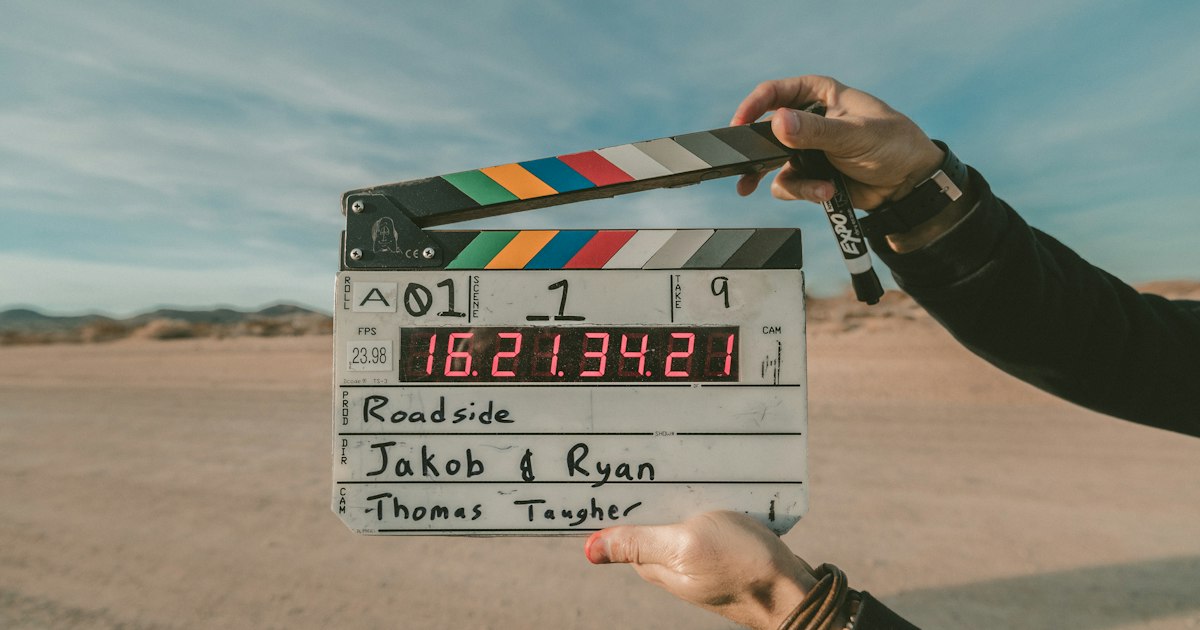
Cinematic video production is the creation of brand video content that applies the craft standards, visual language, and storytelling techniques of film to commercial and marketing contexts. It's the category of video that looks, feels, and moves like a movie - not like a marketing video.
The distinction matters more than it might appear. Cinematic production isn't defined by equipment (you can shoot cinematic on a phone) or budget (you can produce average-looking work with $500,000). It's defined by intention: the deliberate application of cinematographic craft - composition, lighting, camera movement, color, pace - to create an emotional response in the viewer.
For brands, cinematic video production serves a specific function: building emotional equity that advertising can't buy and that product demos can't deliver. The kind of brand positioning that makes a customer choose you before they've read a word of copy.
This guide covers when cinematic production is the right investment, how it fits into a complete video strategy, what it costs, and how AI is changing the economics of premium brand film without compromising the craft.
Cinematic Video vs. Standard Production: The Real Difference
Most marketing video is functional. It shows a product, delivers a message, triggers an action. It's designed to be clear, efficient, and platform-appropriate. There's nothing wrong with functional video - the majority of brand video should be functional.
Cinematic video is not designed to be functional. It's designed to be felt.
The differences show up in almost every production decision:
Lighting
Standard production lighting: three-point setups, even exposure, no distracting shadows, maximum clarity.
Cinematic lighting: motivated light sources, deliberate contrast, shadows that create depth, light that defines mood before anyone speaks a word.
The practical implication: cinematic lighting setups are slower, more technically demanding, and require a Director of Photography who thinks in terms of emotion rather than just exposure. That's a cost. It's also the primary reason cinematic footage looks different to a viewer within three seconds.
Camera Movement
Standard production: locked-off tripod shots, clean handheld when documentary feel is appropriate.
Cinematic production: every camera movement is motivated. The dolly push happens when the scene demands increasing intimacy. The crane reveals the scale of a place at exactly the moment scale matters. Movement as grammar.
Color
Standard production: color graded for brand consistency, accurate skin tones, clean and professional.
Cinematic production: color used as a storytelling tool. Warm palettes for warmth and humanity. Cooler tones for tension, technology, or emotional distance. Color grading that makes a frame feel like a painting.
Pacing and Editing Rhythm
Standard production: clear information delivery pace. Cut when you've shown what you need to show.
Cinematic production: pace as music. Longer holds when stillness is earned. Cuts timed to emotional beats, not just information beats. The edit that respects silence.
Sound Design and Score
The most underrated element in the cinematic vs. standard divide. Standard production: voiceover, product sounds, music from a licensing library.
Cinematic production: original score or carefully selected music that's part of the story rather than background. Sound design that builds texture and atmosphere. The difference between a video that's watched and a film that's experienced.
When Cinematic Video Production Is the Right Investment
Not every brand needs cinematic production, and not every video in a brand's content ecosystem should be cinematic. The question is when the investment delivers returns that justify the cost.
Premium Brand Positioning
If your brand's price premium over category competitors is based substantially on perception - on what it feels like to own, use, or be associated with the product - cinematic production is one of the primary tools for building and maintaining that perception.
Luxury fashion brands, premium automotive, high-end spirits, and premium consumer technology are the obvious examples. But the principle applies anywhere that brand identity is the primary competitive advantage: a consulting firm that needs to signal intellectual authority, a financial services firm that needs to signal stability and care, a healthcare provider that needs to signal humanity and expertise.
According to Forbes analysis of luxury brand video investment, premium brands that consistently invest in cinematic content command 23% higher willingness-to-pay than comparable brands relying on functional product content alone.
Category Disruption
When a challenger brand enters a category dominated by incumbents, standard product video confirms your status as a challenger. Cinematic brand film can reframe the entire category narrative.
Dollar Shave Club's first video is the most cited example - but the underlying principle isn't limited to humor. Apple's Think Different campaign, Nike's brand films, and Patagonia's documentary content all used cinematic production to claim a position that product advertising couldn't have established.
If you're entering a category where the incumbents own functional associations (reliability, performance, price), cinematic production is how you claim the emotional high ground.
Employer Brand and Talent Acquisition
The war for talent has made employer branding a serious marketing investment. Cinematic production applied to culture videos, workplace documentaries, and executive storytelling content delivers significantly stronger candidate response than standard corporate video.
LinkedIn research shows that employer brand content with cinematic production values generates 3x more applicant engagement than standard interview-format or product-showcasing employer videos.
For companies in talent-competitive categories (tech, finance, consulting, healthcare), this differential is meaningful - particularly when calculated against the cost of an unfilled senior role.
B2B Thought Leadership
In B2B categories where the sale is high-value, long-cycle, and relationship-dependent, cinematic production for executive content, company narrative, and case study storytelling creates a perception of authority and care that standard production doesn't.
The signal to a $500,000 procurement buyer or a strategic partner in a significant deal isn't "we made a nice video." It's "this company invests in how they're perceived, which means they invest in quality across the business."
When Cinematic Production Is NOT the Right Investment
Cinematic production is a specific tool. Like any specific tool, it has use cases where it's right and use cases where it's the wrong choice.
Performance Marketing Creatives
The performance creative channel - Meta, TikTok, Google Video - rewards authenticity, speed, and hook strength. The aesthetic expectations are fundamentally different from brand film. A cinematic brand film repurposed as a performance ad typically underperforms against a lower-budget UGC-style hook.
Neverframe's Performance Pack is purpose-built for this use case: high-volume, algorithm-optimized creative that performs in the paid social environment rather than competing with it.
Product Demos and Tutorials
Product demo video and tutorial content require clarity above craft. The viewer is there for information, not inspiration. Cinematic production on a SaaS demo is like designing a warning label with custom typography - the investment doesn't serve the function.
For product demo video production, functional clarity is the quality bar. Reserve cinematic investment for the content that's trying to create a feeling, not explain a workflow.
High-Frequency Social Content
Content created to fill a daily or weekly publishing cadence - social posts, Stories, regular YouTube uploads - needs to be made at pace. Applying cinematic production standards to high-frequency content is economically impossible and creatively unnecessary. The audience's expectation for this content is authenticity and immediacy, not polish.
What Cinematic Video Production Costs in 2026
Cinematic production costs span a wide range because the variables (locations, cast, crew size, post-production complexity) are wide. Here's a realistic breakdown.
Micro-Cinematic (Small Brand, Single Market)
- Crew: Director, DP, 1-2 additional crew
- Equipment: Cinema camera rental, basic lighting package
- Cast: 2-3 talent (day rates)
- Post-production: Color grade, sound design, simple original music
- Duration: 60-90 second brand spot
- Timeline: 6-10 weeks (pre + production + post)
- Total cost: $35,000-$75,000
Mid-Level Cinematic Production
- Crew: Director, DP, gaffer, grip, production designer, 3-4 crew
- Equipment: High-end cinema camera package, full lighting kit, motion equipment
- Cast: 4-8 talent with casting
- Locations: 2-3 locations with permits and production design
- Post-production: Full color grade, sound design, original score, VFX if needed
- Duration: 90 seconds: 3 minutes
- Timeline: 8-14 weeks
- Total cost: $80,000-$200,000
Premium Cinematic Production
- Crew: Named director, full union crew (10-20+ people)
- Equipment: Top-tier cinema package, complex lighting, Steadicam/gimbal/crane
- Cast: Established talent or major casting
- Locations: Multiple locations, significant production design
- Post-production: Premium grade, bespoke score, compositing and VFX as needed
- Duration: 2-5 minutes
- Timeline: 12-20 weeks
- Total cost: $200,000-$1,500,000+
AI-Augmented Cinematic Production
The category being established by AI-native production companies, including Neverframe's Brand Soul Spots service. AI augmentation in cinematic production isn't about replacing cinematographers with algorithms - it's about using AI tools strategically to:
- Reduce pre-production time (location scouting simulation, production design visualization, casting comparison)
- Accelerate post-production (color grade starting points, VFX element generation, sound design assets)
- Enable personalization layers (market-specific versioning, localization) on a single cinematic production
The result: cinematic production quality at 40-60% of the traditional production cost for comparable visual outcomes.
AI-augmented cinematic cost range: $20,000-$80,000 for the mid-tier equivalent of $80,000-$200,000 traditional production.
How to Brief a Cinematic Video Production
The brief for a cinematic project has different requirements than a performance creative or product video brief. Where functional video briefs lead with audience and objective, cinematic briefs lead with emotion and feeling.
The Feeling Brief
The most important question in a cinematic brief is: "How should the viewer feel when this video ends?"
Not what they should know. Not what they should do. How they should feel.
This question forces alignment on the emotional target before anyone discusses messaging, product inclusion, or duration.
Common feeling targets:
- Inspired - "This brand makes me believe something bigger is possible"
- Reassured - "This company understands what matters to me and will take care of it"
- Proud - "Being associated with this brand says something good about me"
- Curious - "I want to understand more about how they see the world"
Each feeling target implies different storytelling choices: protagonist type, narrative arc, visual tone, music.
Reference Films and Visual Inspiration
Cinematic briefs should include visual reference. Not necessarily other brand films - actual films, photography, or visual art that captures the feeling and aesthetic you're targeting.
Three to five visual references with a note on what specifically each reference captures ("the quality of light in this scene," "the relationship dynamic in this sequence," "the visual texture of this palette") is worth more than three pages of written description.
What Must Be Included vs. What Could Be Included
The brief should separate non-negotiables from preferences. Every non-negotiable adds constraint and cost. Be honest about what's actually required vs. what would be nice. A brief that names 12 non-negotiables produces an expensive production with limited creative freedom - and cinematic production benefits enormously from creative freedom.
AI and the Future of Cinematic Video Production
The tension between AI and cinematic production is real but often misstated. The claim that "AI can do cinematic production" conflates what AI can generate with what makes cinematic work powerful.
What AI can generate well:
- Visual elements, textures, backgrounds
- VFX components and compositing elements
- Localized voiceovers and dubbing
- Motion graphics and title design
- Music composition variations
What still requires human creative direction:
- The emotional insight behind the story
- The performance direction from actors or real subjects
- The camera decision made in the moment on set
- The editorial rhythm that gives a film weight
The honest position for 2026: AI-augmented cinematic production is real and significant. It's not AI-generated cinematic production. The craft elements that make cinematic work compelling - the human elements - are still human.
What AI augmentation does is bring those human creative elements to a broader range of production budgets. A brand that couldn't afford $200,000 for a cinematic brand film can now access comparable quality at $45,000. That's a meaningful market expansion, not a quality substitution.
Neverframe and Cinematic Production: Brand Soul Spots
Neverframe's Brand Soul Spots service is built for the brand that understands cinematic production as a strategic investment rather than a luxury expense.
The production approach:
- Human director with feature film experience on every project
- AI augmentation in pre-production visualization and post-production acceleration
- Full color grade, original score, and premium sound design as standard
- Market versioning and localization built into the production architecture from brief stage
Delivery:
- First cut: 6-8 weeks from brief approval
- Final delivery: 8-12 weeks
- Formats: Master + platform-specific cuts (16:9, 9:16, 1:1) + localized versions on request
Positioning: 5 Brand Soul Spots produced per year maximum. The limitation is intentional - it preserves the production quality and director attention that makes the work worth making.
For brands evaluating whether cinematic production is the right investment at this stage, the conversation starts with understanding what emotional positioning the brand needs to build and whether there's a visual story worth telling.
Explore the complete Neverframe approach to brand film production, or review how AI is transforming video production economics for context on where cinematic production sits in the broader landscape.
Summary: Cinematic Video Production in 2026
Cinematic video production is the highest-leverage investment in brand equity a company can make with video - and the one most frequently either misused (applied where functional production is better) or underused (skipped entirely because the traditional cost was prohibitive).
The principles:
- Cinematic is about feeling, not footage quality - the goal is emotional response, not production polish
- Right use cases: Premium positioning, category disruption, employer brand, B2B thought leadership
- Wrong use cases: Performance creative, product demos, high-frequency social content
- Cost range in 2026: $20,000-$80,000 for AI-augmented; $80,000-$200,000+ for traditional premium
- AI augmentation: Reduces cost by 40-60% for comparable visual outcomes, while preserving the human creative elements that make cinematic work compelling
The brand that understands this distinction - and builds a video content strategy that uses cinematic production where it matters and functional production everywhere else - has a structural advantage in both brand equity and marketing efficiency.
See how Neverframe's Brand Soul Spots fits into a complete video strategy.
The Visual Language of Cinematic Production: A Deeper Breakdown
Understanding the specific visual vocabulary of cinematic production helps brand teams brief more effectively and evaluate production proposals with more precision. These are the elements that separate cinematic work from standard production in practice.
Aspect Ratio
Standard marketing video: 16:9 widescreen for traditional placements, with adaptations to 9:16 and 1:1 for social.
Cinematic production: often mastered in 2.39:1 anamorphic widescreen - the ultra-wide format of theatrical films - or 2.00:1 scope. The horizontal black bars at top and bottom (the "letterbox") are an immediate visual signal that the viewer is watching something of film-level intent, not a corporate video.
This choice has real implications for social distribution: it requires cropped cuts for vertical formats. But for the primary brand film deployment, the letterbox format earns immediate visual authority.
Lens Choice
The lens used for cinematography carries enormous visual information that viewers process subconsciously.
Wide lenses (24mm and below) feel immersive and epic - they're the lenses of landscape and action, of scale and environment.
Standard-to-medium lenses (35mm, 50mm) feel naturalistic - close to how we actually see, which makes intimate character-driven scenes feel honest.
Long lenses (85mm+) compress distance between subject and background, creating the "bokeh" background separation that signals premium aesthetic - but also a kind of intimacy and pressure that's used carefully in dramatic storytelling.
Anamorphic lenses add characteristic horizontal lens flares, oval bokeh, and a slight warmth to the image that is strongly associated with cinematic quality by culturally literate audiences.
Camera Movement Design
In standard production, camera movement follows the action. In cinematic production, camera movement IS part of the narrative - it's choreographed with the same intentionality as actor blocking.
Key movements and their meanings:
Dolly push-in: Increasing intimacy, importance, or tension. Used at the moment of revelation or emotional climax.
Dolly pull-out: Isolation, ending, loss. The camera creating distance as something finishes.
Crane or jib up: Scale, freedom, transcendence. The move that shows the world from above - expanding possibility.
Handheld: Authentic energy, urgency, presence. The hand-held camera follows the chaos of the world without imposing order - used carefully in cinematic work because overuse reads as documentary or corporate approximation rather than intentional filmmaking.
Tracking (following subject): Immersion in a journey. Moving with someone through a space creates accompaniment - the viewer feels they're walking alongside.
Production Design and Art Direction
What's in the frame matters as much as how the frame is captured. Production design - the deliberate art direction of every visual element in the shot - is what separates professional cinematic production from naturalistic shooting.
This includes:
- Set construction or location selection and dressing
- Wardrobe and costume choices
- Color palette control within the frame (ensuring the brand's visual identity is present without being literal)
- Prop selection that carries meaning
For brand cinematic production, production design is often where brands have the most influence and the most temptation to over-specify. The brief should communicate the emotional color of the world the brand wants to inhabit, not a specific set list.
Post-Production in Cinematic Video: Where the Film Is Made
In the industry, there's a saying: "the film is written three times - once in the script, once on set, and once in the edit." For cinematic brand production, this is precisely true. Post-production is not the packaging stage; it's a creative stage of equal importance to the shoot.
The Edit
The first cut of a cinematic brand film is almost never the final cut. The editor (and the director in collaboration) is finding the film's rhythm, pacing, and emotional architecture from the raw footage. This process takes time that standard production timelines don't build in - and rushing it produces work that feels perfunctory rather than crafted.
Expect: 2-4 weeks of editing and internal review cycles before a client-ready first cut.
Color Grading
Color grading in cinematic production is a creative conversation, not a technical correction. The colorist is applying a deliberate visual interpretation to every shot - building the world of the film.
This is where the atmospheric quality of cinematic work is often most significantly shaped. A blue-tinted grade signals cold precision and technology. An amber-warmed grade signals humanity, warmth, history. Desaturated high-contrast grades read as gritty and honest.
For brand cinematic production, the color grade should always be discussed at brief stage - agreeing on the emotional register before shooting affects lighting decisions and set design.
Sound Design
Sound design is the most undervalued element in brand video production broadly and in cinematic production specifically. The texture, atmosphere, and emotional weight carried by sound can make an average image sequence feel like an experience.
Key sound design elements in cinematic production:
- Ambient sound layers: The acoustic world of the scene - room tone, environmental sounds, the specific texture of a location
- Foley: Recreated sound effects synchronized to action - footsteps, handling sounds, physical presence in the scene
- Sound design effects: Abstract or processed sounds that create emotional tone rather than realistic environment
- Score integration: The relationship between music and sound design - how they layer, where music leads and where the world sound leads
A cinematic brand film with a standard music licensing track and no sound design is the equivalent of color grading without a professional colorist: technically finished, creatively incomplete.
The Role of Talent in Cinematic Production
The talent in a cinematic brand film - whether professional actors, real customers, or company leadership - carries more creative weight than in standard production because the camera holds them longer and with greater intimacy.
Casting for Authenticity
Cinematic production lives or dies on belief. Does the viewer believe in the people on screen?
The most common error in brand cinematic casting: choosing talent for their look rather than their presence. Photogenic people who can't carry a close-up at rest - who look tense or self-conscious when the camera is still on them - undermine the entire investment.
The right filter for cinematic talent: who radiates the emotional quality the film needs, not who looks most like your target customer?
Working with Non-Actors
Many brand cinematic productions feature real people - real customers, real employees, founders, community members - rather than professional actors. This choice carries authenticity advantages that no professional actor can fully replicate.
The production challenge: non-actors are authentic but not reliably consistent. Getting the performance you need often requires more shooting time, more patience in direction, and the ability to create conditions where the real person stops performing for the camera and simply is themselves.
This is a directing skill, not a technical one. It's one of the primary reasons experienced documentary and narrative directors bring value to brand cinematic production that a technically skilled commercial director can't always replicate.
Cinematic Production Case Study: The Arc of a Brand Film
To make the principles concrete, here's a simplified walk-through of the production arc for a mid-budget cinematic brand film:
Week 1-2: Creative Development Director and brand team develop the core emotional concept. What story does this film tell? What feeling does it end on? What visual world does it inhabit? Agreement on a one-page creative brief and mood board.
Week 3-4: Pre-Production Location scouting, casting, production design development, shot list creation, crew assembly, equipment sourcing, production schedule. The most time-intensive preparation stage - all the decisions that make shoot days efficient.
Week 5: Production 2-4 shoot days depending on scale. The production schedule is built backward from the shot list - everything has a slot, every slot has a contingency.
Week 6-8: Post-Production Phase 1 Rough cut editing, first creative review with director and brand team. Major structural decisions made at this stage.
Week 8-10: Post-Production Phase 2 Fine cut, color grade, sound design, score composition or selection, visual effects if required.
Week 10-12: Final Delivery Final client review, revision if required, final export in all required formats and aspect ratios.
For AI-augmented production, several stages (particularly pre-production visualization and post-production acceleration) are compressed, bringing typical timelines to 8-10 weeks without sacrificing the craft stages that matter.
Measuring the Impact of Cinematic Brand Production
The common objection to cinematic video investment is that it's difficult to measure. This is partially true and partially a measurement methodology problem.
Cinematic production generates brand equity - a long-duration, compound-building asset rather than a short-duration, direct response signal. Measuring it requires different methods:
Brand lift studies: Pre/post measurement of aided awareness, brand attribute association, and purchase consideration among exposed vs. unexposed audiences. YouTube Brand Lift and Meta Brand Survey offer these measurement tools.
Qualitative customer insight: Direct surveys or interview research with customers and prospects asking specifically about brand perception and what drove consideration. The "how did you first hear about us / what made you choose us" data often surfaces cinematic content influence.
Share rate and organic reach: Content that people voluntarily share is creating brand impressions at zero incremental media cost. Track organic share rate for cinematic content vs. functional content.
Partner and employee engagement: The people inside your ecosystem - distribution partners, potential hires, potential investors - often see brand cinematic content before customers. Measuring engagement among these audiences captures value that standard marketing attribution misses.
The brands that get the best long-term returns from cinematic video investment are the ones that measure its effects correctly - not expecting it to behave like a performance ad, but tracking the brand equity indicators it's actually designed to build.
Work with Neverframe. If you want this executed rather than explained, talk to the studio or compare the production packages.