Brand Commercial: AI vs Studio
Brand commercial production costs $120K-$350K the traditional way. AI-first production cuts that by 60-80%. Here is everything CMOs need to know in 2026.
Published 2026-04-26 · AI Video Production · Neverframe Team
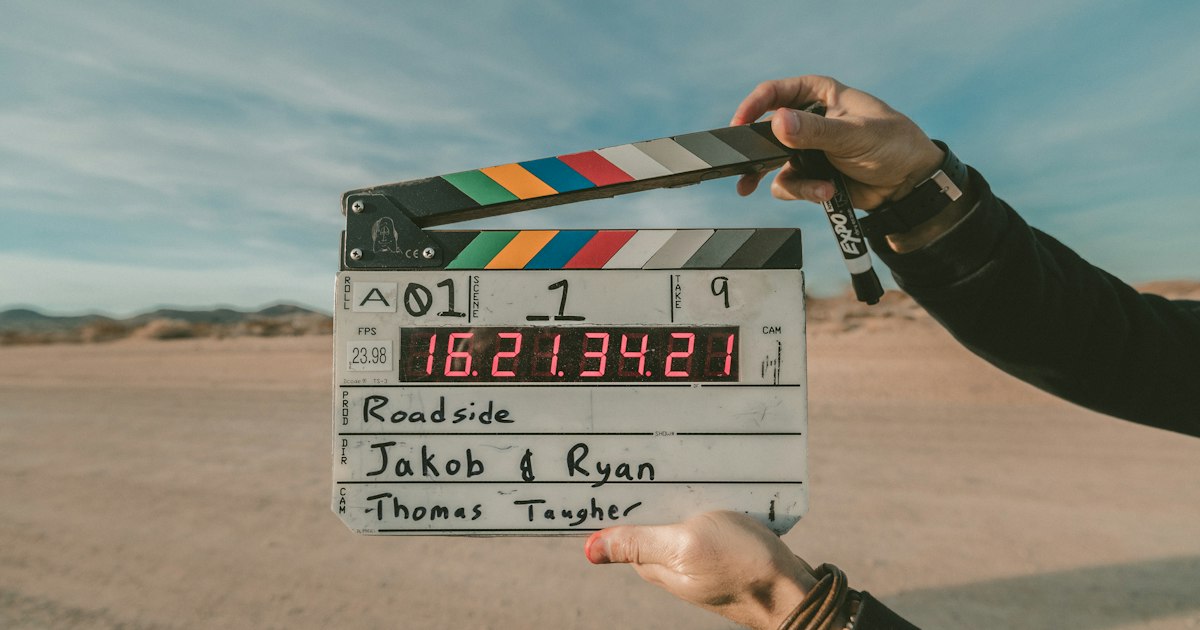
Brand Commercial Production in 2026: AI vs. Traditional Studio
Brand commercial production has fundamentally changed. The gap between a $300,000 traditional studio shoot and a $15,000 AI-assisted production used to be obvious - in quality, reach, and result. That gap is closing faster than most brand directors expect.
This guide breaks down what brand commercial production actually costs, how AI has restructured the process, when to choose a traditional studio over an AI-first partner, and what the smartest CMOs in 2026 are doing instead of choosing between the two.
What Is Brand Commercial Production?
Brand commercial production is the full end-to-end process of creating a video advertisement or film that represents a brand - its values, products, personality, and positioning - at a high level of craft and intentionality.
It's distinct from:
- Product video production (focused on features, demo, specification)
- UGC-style content (lo-fi, social-native, performance-oriented)
- Corporate video (internal communications, investor relations)
Brand commercials are the work you run as a 30-second pre-roll, a hero brand spot on your website, a campaign anchor film. They define perception, not just inform it.
According to Wyzowl's 2024 State of Video Marketing report, 87% of marketers say video delivers positive ROI - but the most valuable brand-building results consistently come from top-of-funnel, high-production commercial content, not just performance clips.
Traditional Brand Commercial Production: How It Works
In a traditional production model, a brand commercial moves through three distinct phases:
Pre-Production
Pre-production is where most of the budget is set, often invisibly. A full pre-production phase includes:
- Creative strategy and concept development (1-4 weeks)
- Scriptwriting and treatment creation (1-2 weeks)
- Director selection and casting (1-3 weeks)
- Location scouting and permitting (1-2 weeks)
- Production design, wardrobe, and prop sourcing (2-4 weeks)
- Crew assembly (1 week)
For a mid-tier brand commercial, this phase alone consumes 6-12 weeks and anywhere from $20,000 to $80,000 before a single camera rolls.
Production
Production - the actual shoot - is typically 1-3 days for a 30-60 second commercial. On those days, you're paying for:
- Director and DP day rates ($3,000-$15,000+ per day)
- Camera and lighting equipment ($5,000-$20,000 per day)
- Location rental or studio costs ($5,000-$50,000)
- Talent (actors, VO artists) including usage rights
- Hair, makeup, wardrobe, and props
- Production coordinator and logistics
- Catering, transport, insurance
A 2-day shoot for a well-produced brand commercial routinely runs $80,000-$200,000 in production costs alone.
Post-Production
Post-production for a 30-second brand commercial typically includes:
- Offline edit and picture lock (1-2 weeks)
- Color grading with a senior colorist
- Sound design and music licensing or original composition
- VFX and motion graphics if required
- Online edit, delivery, and versioning
Post adds another $15,000-$60,000 depending on complexity, and 4-8 weeks to the timeline.
Total traditional brand commercial production cost: $120,000-$350,000+ Total timeline: 12-24 weeks from brief to delivery
AI-Assisted Brand Commercial Production: What Changes
AI does not replace the creative vision required for great brand commercial work. What it replaces are specific labor-intensive, time-consuming, and expensive production steps.
Here's how an AI-first production partner restructures the same work:
AI in Pre-Production
Concept visualization: Instead of paying a director to produce concept boards and moodboards over 3 weeks, AI-generated imagery can visually explore 20 creative directions in 2-3 days. CMOs see the visual intent early, before creative decisions lock in.
Script development with AI co-writing: Brand voice models trained on a client's existing content can generate first-draft scripts aligned to tone in hours rather than days - with human creative direction shaping and refining them.
Location scouting and virtual setups: Digital environment building and AI-assisted location simulation can reduce the need for physical scouting in many cases.
AI in Production
AI-generated footage and characters: For certain commercial formats - lifestyle vignettes, product demonstrations, abstract brand statements - AI-generated footage now achieves cinematic quality that would have required expensive studio shoots two years ago.
Digital talent and AI avatars: Rather than casting and scheduling human talent for campaign extensions, brands can create AI-generated talent assets that are deployed at scale across markets without re-casting.
Scene synthesis: AI can composite and reconstruct scenes that would require complex physical sets or remote locations, at a fraction of the cost.
AI in Post-Production
Automated rough cuts: First-pass editing from raw footage (or AI-generated scenes) now happens in hours using AI edit tools. Human editors refine, don't start from scratch.
AI color grading assistance: While human colorists remain essential for final brand commercial work, AI color matching and grade initiation reduces billable color hours by 50-70%.
Localization and versioning: A brand commercial produced in English for the US market can be re-versioned for 8 languages and 12 markets with AI voice synthesis, lip-sync adjustment, and automated subtitle generation - tasks that previously required full re-production.
What This Means for Cost and Timeline
| Production Element | Traditional | AI-Assisted |
|---|---|---|
| Pre-production | 6-12 weeks / $30-80K | 2-4 weeks / $8-18K |
| Production shoot | 1-3 days / $80-200K | 0-1 days / $5-30K |
| Post-production | 4-8 weeks / $15-60K | 1-3 weeks / $5-20K |
| Localization (8 markets) | $40-100K | $8-20K |
| TOTAL | $165-440K / 14-24 weeks | $26-88K / 4-9 weeks |
The cost reduction is 60-80%. The timeline reduction is comparable. The quality delta - which once made this an easy decision for premium brands - is narrowing rapidly.
When Traditional Production Still Wins
AI-first brand commercial production is not the right answer for every project. Here are the scenarios where traditional production still delivers outcomes AI cannot:
Ultra-Premium Brand Identity
For luxury brands where the production itself is a brand signal - the craftsmanship visible in every frame, the choice of a Deakins-caliber DP, the physical texture of 35mm film - traditional production remains irreplaceable.
A Rolex commercial is not just a message. It's a demonstration of care, patience, and the refusal of shortcuts. The production method is the message. AI-assisted production, at its current stage, cannot replicate this signal.
Human Talent as Brand Asset
When the brand's commercial features a known face - an athlete, a celebrity, an executive - the production requires that talent physically present. AI can extend and multiply that talent's presence through digital twin technology, but cannot replace the originating shoot.
Category-Defining Creative Ambition
Some brand commercials are meant to become cultural reference points. Nike's "Just Do It" campaigns, Apple's "1984," Old Spice's "The Man Your Man Could Smell Like." Work at this level requires the full depth of human creative direction, risk-taking, and craft that AI tools support but don't drive.
If your goal is brand safety and media efficiency, AI-assisted production is likely the right answer. If your goal is category disruption through a single piece of creative work, traditional production with AI support may serve you better.
The Hybrid Model: Where Most Smart Brands Are Landing
The most sophisticated brand teams in 2026 are not choosing between traditional and AI production. They're designing hybrid production strategies:
- Hero spot in traditional production - the annual or campaign flagship film, produced with full studio resources and top-tier creative direction, built for longevity and brand-defining impact
- Campaign extensions in AI production - 15-second cutdowns, social variants, localized versions, seasonal adaptations, and platform-specific formats all produced AI-first from the hero creative foundation
- Performance layer in engineered UGC - high-volume, low-cost social and paid social content, engineered to convert rather than brand-build, produced in continuous output rather than campaign cycles
This three-tier architecture delivers brand consistency from hero to performance creative, while radically reducing cost-per-asset and time-to-market at the production layers where AI excels.
According to HubSpot's 2024 State of Marketing, brands publishing 5+ pieces of video content per month see 3x the organic reach of those publishing monthly. The production volume AI enables makes this achievable for brands that previously couldn't sustain it.
Brand Commercial Production Costs: Full Breakdown for 2026
Understanding what drives cost in brand commercial production helps CMOs and brand directors budget more accurately and negotiate more effectively.
Traditional Production Cost Drivers
Director fee: A mid-tier commercial director charges $8,000-$25,000 per day. Senior directors with strong reel work run $25,000-$75,000+ per day.
DP and camera: A top-tier director of photography plus camera package runs $5,000-$15,000+ per day.
Production design: For branded spaces, product environments, or styled sets, production design and art department adds $15,000-$60,000.
Talent and usage rights: Actors for a 30-second TV commercial with national usage rights typically run $5,000-$30,000 per performer, including usage fees.
Music: Original music composition runs $8,000-$40,000. Licensed tracks for commercial use with broad rights run $5,000-$25,000. Sync licensing for known tracks on national broadcast runs $50,000-$500,000+.
Post-production: Senior editors, colorists, sound designers, and VFX artists bill $5,000-$25,000+ per week.
AI-Assisted Production Cost Drivers
Creative direction and strategy: This cost remains similar - a strong creative director and brand strategist are still essential. Expect $5,000-$15,000.
AI generation and rendering: Depending on platform, AI video generation runs $500-$5,000 for a commercial project.
Human refinement and art direction: Even in AI production, skilled humans refine outputs, ensure brand consistency, and direct the generation process. This runs $3,000-$12,000.
Sound and music: Similar costs apply - AI cannot cost-effectively replace music licensing or original composition.
Quality assurance and final polish: $2,000-$8,000.
How to Brief a Brand Commercial Production
Whether working with a traditional studio or an AI-first production partner, the quality of your brief determines the quality of your output.
A strong brand commercial brief includes:
Business Context
What business problem does this commercial solve? What metric are you moving - brand awareness, consideration, purchase intent, share of voice? What's the campaign budget and expected media spend? A commercial running behind $5M in media deserves more production investment than one running behind $50,000.
Audience Intelligence
Who is the primary viewer? What do they believe about your brand today versus what you want them to believe after seeing this commercial? What emotional state should they leave with?
Creative Parameters
What must always be true? Brand visual guidelines, mandatory product appearances, legal requirements. What can flex? Tone, setting, talent, format.
Success Criteria
How will you evaluate this commercial before release? What testing methodology will you use? What does "good enough" look like versus "exceptional"?
Distribution Context
Where will this commercial run? The technical requirements, attention dynamics, and viewing context for a 30-second Super Bowl spot are completely different from a 6-second pre-roll or a 60-second Facebook video. Brief for the context, not a generic "video."
Common Mistakes in Brand Commercial Production
Casting too late: Production timelines consistently slip because talent availability hasn't been confirmed before pre-production begins. Lock talent early or build contingency into the schedule.
Under-budgeting post-production: Brands frequently over-invest in the shoot and run out of budget during post. Music, sound design, and color are not luxuries in brand commercial work - they are often the difference between forgettable and memorable.
Briefing to execution rather than outcome: Telling your production partner "we need a 30-second commercial showing our product in use" is an execution brief. Telling them "we need to shift perception of our brand from functional to premium" is an outcome brief. Outcome briefs produce better creative.
Ignoring localization at brief stage: Brands frequently produce a hero commercial without considering that it will need to run in 6 markets. International adaptation costs 40-60% less when built into the original production rather than retrofitted in post.
Skipping creative testing: For commercials running behind significant media spend, creative testing before final lock is always worth the investment. Even simple 5-second testing can identify fatal communication issues that survived full internal review.
Measuring Brand Commercial ROI
Brand commercial production is often criticized for being difficult to measure. Here's what actually works in 2026:
Brand Lift Studies
Platforms including Meta, YouTube, and Amazon run in-product brand lift studies that measure awareness, recall, and consideration lift from specific creative assets. A well-executed brand commercial should show measurable lifts of 3-8 points on these metrics.
Share of Voice
Tracking media-adjusted brand awareness against competitors over time quantifies whether brand commercial investment is building position in category.
Search Volume Analysis
Organic search volume for brand keywords, competitor branded terms, and category terms responds to effective brand commercial campaigns. Track 8-12 weeks after campaign launch.
Direct Revenue Attribution
For DTC brands running brand commercial content in digital environments with conversion tracking, last-touch attribution undervalues brand commercial impact. Use data-driven attribution models that account for view-through conversion windows of 7-30 days.
According to Forbes research on video marketing, brands with consistent video marketing see 49% faster revenue growth than non-video brands over a 3-year period. Brand commercial production is not separate from business performance - it is business performance at the brand layer.
Choosing a Brand Commercial Production Partner
In evaluating production partners - traditional studio or AI-first - apply these criteria:
Creative reel quality: Does their existing work reflect the visual quality, narrative sophistication, and brand-thinking your project requires? Don't evaluate based on technical capability alone.
Producer experience with your category: Brand commercial production for luxury is different from CPG, which is different from B2B SaaS. Category experience shortens ramp time and reduces brief-to-execution friction.
Post-production capability: Most production problems surface in post. Evaluate the post team as carefully as the shoot team.
Versioning and localization workflow: If your commercial will need adaptations, understand their versioning workflow before you commit. AI-first partners typically offer this at dramatically lower cost. See our guide on multilingual video production for what to expect.
Transparent pricing model: Hidden costs in brand commercial production are common. Demand a full cost breakdown by production phase, talent, usage rights, and post-production before signing. Our video production budget guide provides benchmarks.
Summary: Brand Commercial Production in 2026
Brand commercial production is undergoing its most significant structural change since the transition from film to digital. AI-first production partners can now deliver cinematic quality at 60-80% cost reduction and 50-70% timeline compression versus traditional studios for most commercial formats.
Traditional production retains its premium advantage for ultra-luxury brand work, projects where human talent is the brand asset, and category-defining creative ambitions.
The winning strategy for most brands is a tiered production architecture: traditional production for hero creative, AI production for campaign extensions and platform adaptations, and engineered UGC for performance creative volume.
For brands ready to explore what AI-first brand commercial production looks like in practice, Neverframe's Brand Soul Spots service delivers cinematic quality without the traditional studio cost structure. For brands that need campaign extension content at scale, our Performance Pack delivers AI-first video at the volume modern media plans demand.
The Brief-to-Broadcast Timeline: What to Plan For
One of the most persistent pain points in brand commercial production is timeline mismanagement. Marketing teams commit to media buys before production is complete. Agencies underestimate post-production complexity. Legal reviews create unexpected delays. Here's a realistic timeline breakdown for both production models:
Traditional Brand Commercial Timeline
| Phase | Duration |
|---|---|
| Strategy and brief finalization | 1-2 weeks |
| Agency selection or director engagement | 1-2 weeks |
| Pre-production (treatment, casting, location) | 4-8 weeks |
| Production shoot | 1-3 days |
| Rough cut review cycles (2-3 rounds) | 2-4 weeks |
| Color, sound, VFX finalization | 2-3 weeks |
| Legal and compliance review | 1-2 weeks |
| Final deliverables and versioning | 1 week |
| Total | 12-24 weeks |
AI-Assisted Brand Commercial Timeline
| Phase | Duration |
|---|---|
| Strategy and brief finalization | 3-5 days |
| Creative concept development (AI-accelerated) | 1 week |
| Asset generation and production | 3-7 days |
| Human refinement and review cycles | 1-2 weeks |
| Color, sound, final polish | 3-5 days |
| Legal and compliance review | 3-5 days |
| Delivery and versioning | 2-3 days |
| Total | 4-8 weeks |
The implication for campaign planning: if you need a TV commercial, plan for 5 months from brief to air. If you need digital campaign creative, plan for 6-8 weeks. These timelines only work if your internal review process doesn't add 3 months to them.
Brand Commercial Formats and Distribution: Where Your Commercial Will Run
The channel determines the format. Too many brands produce a single commercial without thinking about where it will actually run - then face expensive re-versioning costs to adapt it for channels the original production wasn't designed for.
Linear Television
A traditional 30-second or 60-second broadcast commercial requires broadcast-safe delivery specs: typically a 1920x1080 MXF or MOV master, specific loudness standards (ATSC/A/85 in the US), closed captions, and format verification by the broadcaster.
Television reach has declined but remains significant for brands targeting audiences over 35. For a DTC brand or tech company targeting 18-34 year olds, linear TV spend is typically harder to justify unless the media is very specifically bought.
Connected TV (CTV) and Streaming
CTV - ads served inside streaming apps on smart TVs, Roku, Amazon Fire TV, and similar platforms - is the fastest-growing video ad channel by spend. Formats are similar to traditional TV (15 and 30 seconds, non-skippable), but targeting capability is dramatically superior.
A brand commercial produced for TV can typically be adapted for CTV distribution at minimal cost. CTV is increasingly the priority channel for brand commercial investment that used to go to network TV.
Digital Pre-Roll (YouTube, Programmatic)
YouTube TrueView (skippable after 5 seconds) and programmatic pre-roll require different creative than broadcast TV. The hook must land within the first 5 seconds or viewers skip. The visual identity and core message must appear before the skip button is active.
A 30-second TV commercial typically does not work well as YouTube pre-roll without a re-cut that front-loads the hook. Budget for a "digital re-cut" whenever a TV commercial is also running as pre-roll.
Social Media Distribution
Instagram, TikTok, and Facebook each have different aspect ratios, caption behavior, sound-off viewing rates, and audience attention dynamics. A 30-second horizontal TV commercial running as a social video ad will significantly underperform versus a social-native vertical cut of the same material.
For social, plan for at minimum a 9:16 vertical version and a 1:1 square version alongside any horizontal production. These versions are significantly cheaper to produce at the same time as the primary production than to create after the fact.
Owned Media: Website and Landing Pages
The brand commercial on your website homepage or brand landing page is often the most-viewed piece of video your brand has. It is also often an afterthought.
Optimize for this context: autoplay silent (muted autoplay is supported by most browsers), full-screen hero format, with strong text overlay or captions ensuring message delivery without sound.
The Role of Music in Brand Commercial Production
Music is one of the most underestimated variables in brand commercial success. Research consistently shows that audio - including music - accounts for up to 47% of a viewer's emotional response to a piece of video content.
The music decision in brand commercial production involves three choices:
Original Composition
An original music track composed specifically for the commercial gives the brand a unique sonic identity. When a track becomes associated with a campaign, it creates brand recall that extends beyond the visual.
Cost: $8,000-$40,000 for a 30-60 second composition from a credentialed composer. Higher for well-known composers.
Timeline: 2-4 weeks from briefing to deliverable stems.
Best for: Brand campaigns where the audio identity is part of the brand-building objective, luxury and premium category work.
Library Music Licensing
Music libraries (Musicbed, Artlist, Epidemic Sound for high-end) offer cleared commercial music at lower cost than original composition.
Cost: $500-$5,000 for a standard commercial license. Broader broadcast rights (TV, national, unlimited) can run $5,000-$25,000.
Timeline: Can be selected and licensed in days.
Best for: Tight timelines, mid-tier brand commercial production, digital-only distribution.
Sync Licensing (Existing Tracks)
Using a commercially released track - a song people know - creates instant cultural association and can dramatically elevate brand perception.
Cost: $50,000-$500,000+ for national broadcast usage of a known track. Even relatively obscure tracks can cost $15,000-$80,000.
Timeline: 2-8 weeks for rights clearance.
Best for: Campaigns with significant media spend where the cultural capital of a known track is worth the cost. The math only works at scale.
Case Studies: What AI Brand Commercial Production Looks Like in Practice
DTC Consumer Brand: Quarterly Campaign Production
A DTC home goods brand producing 2 major commercials per year with a traditional studio was spending $180,000-$240,000 annually in production and getting 2 hero spots plus minimal adaptations.
By transitioning to an AI-first production partner, the same budget produced:
- 4 hero brand commercial spots (seasonal alignment)
- 12 social-specific adaptations
- 6 localized versions for UK, Canada, and Australia
- 48 performance creative variants per quarter
The total production volume increased 4x while the average cost per asset decreased 75%.
B2B SaaS Company: Product Commercial for Enterprise Launch
A B2B software company needed a product commercial for an enterprise market launch with a 6-week timeline - impossibly tight for traditional production.
AI-first production enabled:
- Week 1: Brief, script, storyboard
- Week 2: AI asset generation and visual development
- Week 3: Human refinement, voiceover recording
- Week 4-5: Post-production, review cycles, legal clearance
- Week 6: Delivery and distribution setup
The commercial launched on the original timeline at a cost of $28,000 - significantly below the $90,000-$120,000 a traditional production would have required at that timeline.
These outcomes aren't outliers. They represent the structural capability difference between AI-first and traditional production for most commercial formats.
Final Thoughts: Brand Commercial Production as a Strategic Investment
The temptation in tight budget environments is to treat brand commercial production as discretionary - something to cut when margins are under pressure. This is typically the wrong call.
Brand commercial production, done well, is a compounding asset. A well-executed brand spot runs for 12-18 months. A great brand film runs for years. The media spend behind it amortizes the production cost across millions of impressions.
The math changes in AI-assisted production: lower cost per asset means better production ROI even at lower media spend levels. Brands that previously couldn't justify brand commercial investment at traditional production costs can now build brand equity through video at a scale that makes economic sense.
The strategic question is not whether to invest in brand commercial production. It is how to structure the investment to maximize both the quality of hero creative and the volume of campaign execution.
Getting this architecture right - traditional production where craft quality is the competitive differentiator, AI production where volume and speed are the requirements - is where brand commercial strategy lives in 2026.
Work with Neverframe. If you want this executed rather than explained, talk to the studio or compare the production packages.