Animation Video Production
Discover how animation video production works, what it costs, and why AI is making animated content accessible for brands at every scale.
Published 2026-03-30 · AI Video Production · Neverframe Team
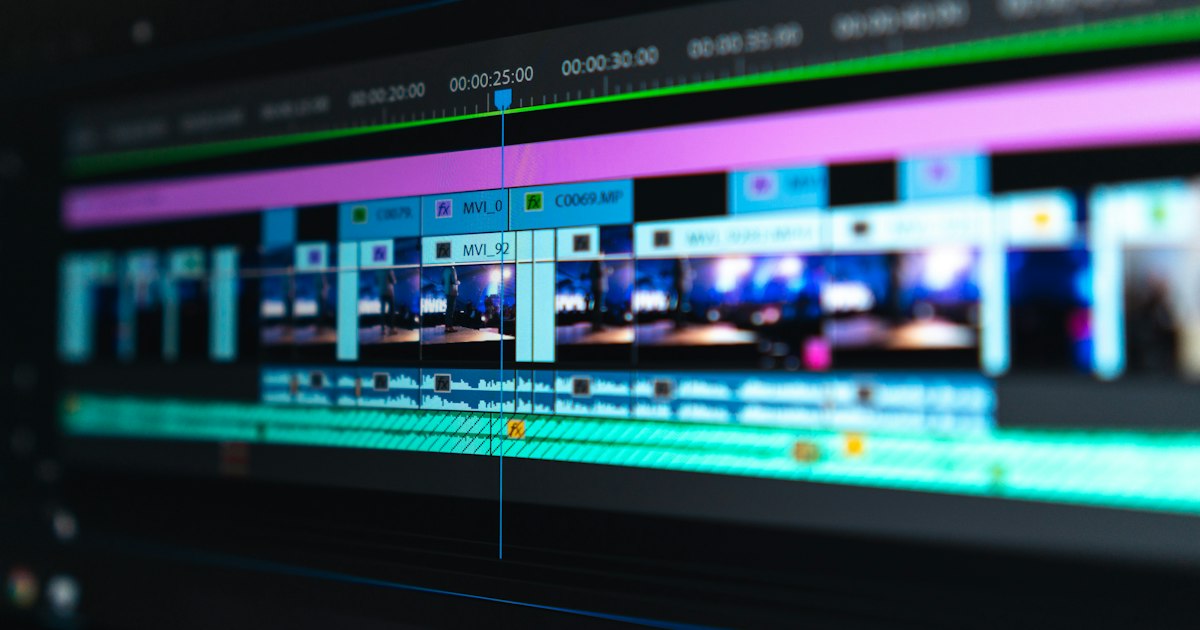
Animation video production sits at an interesting intersection right now. On one side, demand has never been higher. On the other, AI tools are fundamentally changing what animated content costs, how long it takes, and who can produce it.
This guide covers how animation video production works, the main formats and styles, what drives cost, and where AI is creating genuine opportunity for brands willing to move beyond traditional production models.
Why Animation Works for Brands
Animation solves problems that live action cannot. Complex processes become clear. Abstract concepts become tangible. Characters can demonstrate software features, explain financial products, or illustrate medical procedures in ways that filmed video struggles to match.
Animation also offers complete creative control. The visual environment is built from scratch, which means every element of the frame can be designed to support the message. Color, composition, pacing, and motion all serve the story with precision that location-based filming can't replicate.
For brands, the practical advantages are significant. Animation doesn't require on-location filming, which removes weather, logistics, and physical access as variables. It scales across markets without reshoots. A character or visual system developed for one video can carry across an entire content series. Localization requires only audio changes rather than full reproductions.
The tradeoff has traditionally been cost and time. Quality animation was expensive and slow. AI is changing both of those constraints in ways that make animation newly accessible for brands that couldn't justify it before.
Types of Animation Video Production
Animation covers a wide range of styles, and the right choice depends on the content, the brand, the audience, and the budget.
2D Animation
2D animation is the most widely used format for brand content. Characters, objects, and environments are created and animated in two-dimensional space. The style can range from simple flat design to highly detailed illustrated worlds.
2D animation works particularly well for explainer videos, product demonstrations, and educational content. It communicates clearly, it's relatively cost-efficient, and it adapts well to different brand aesthetics. See our explainer video cost guide for a detailed breakdown of what 2D animation costs across different production tiers.
Motion Graphics
Motion graphics are animation applied to graphic design elements: typography, icons, charts, logos, and data visualizations. This style doesn't involve characters or narrative environments. Instead, it brings static design to life.
Motion graphics are the backbone of corporate communications, product feature videos, and data-driven storytelling. They're also the most common animation format for social media content, where information density and visual clarity matter more than character-driven narrative.
3D Animation
3D animation creates objects and environments in three-dimensional space. It delivers the highest production value but also the highest cost and longest timelines.
For product visualization, architecture, and premium brand content, 3D is often the right choice. A 3D render of a product can show features, mechanisms, and materials in ways that filmed video cannot. Automotive brands, consumer electronics companies, and pharmaceutical businesses have used 3D animation for years. The format is now reaching earlier-stage companies as AI-assisted 3D tools reduce production costs.
Whiteboard Animation
Whiteboard animation simulates the hand-drawing of illustrations in real time. It's a straightforward format well-suited to educational content, training videos, and explanations that benefit from a step-by-step visual build.
The style communicates clearly but lacks visual sophistication. For brands investing in animation as a creative differentiator, whiteboard typically isn't the right choice. For internal training and process documentation, it's practical and cost-effective.
Mixed Media and Hybrid Production
Many productions now combine animation with live footage. A filmed interview plays while animated graphics appear over the speaker. A product demo uses 3D animation to show internal mechanisms before cutting to live footage of the product in use.
Mixed media approaches let brands leverage the strengths of each format. Filmed footage adds authenticity and human connection. Animation adds clarity and visual impact. Our AI commercial production guide explores how hybrid formats perform in advertising contexts.
The Animation Production Process
Animation video production follows a distinct process that differs from live action in important ways.
Creative Development and Brief
Like all video production, animation starts with a clear brief. What the brief needs to address is somewhat different from live action. Since there's no physical reality to capture, every visual element must be created intentionally. The brief should define the visual style, the level of detail, the tone, any character requirements, and how the animation relates to the broader brand visual identity.
References are especially valuable here. Sharing examples of animation styles that resonate with the brand, as well as examples that don't, helps align the production team with the client's visual expectations before any work begins.
Script and Storyboard
Script and storyboard are arguably more important in animation than in live action. Because every frame is built by hand, changes after production begins are significantly more expensive than they are in film editing. Getting the script right, then approving the storyboard before animation begins, prevents costly downstream revisions.
The storyboard for an animated video is detailed. It shows every scene, every camera movement, every key moment of action. It's essentially a rough version of the finished video in static form. Client approval at this stage is not a formality. It's the critical checkpoint before expensive animation work begins.
Style Frames and Design Development
Before any animation begins, the visual style is established through style frames. These are fully designed, static images that show exactly what the finished animation will look like. Color palette, typography, character design, environment design, and overall aesthetic are all finalized here.
Style frames prevent the most common and most expensive problem in animation production: discovering that the client and the production team had different visual expectations after a significant portion of the work is done.
Animation Production
With the script, storyboard, and style frames approved, animation production begins. Scenes are built, characters are rigged for movement, and the visual world is assembled frame by frame.
This is where the bulk of the production cost lives. Professional 2D animation typically requires 4 to 8 weeks for a 90-second video. 3D animation takes longer. AI-assisted tools are compressing these timelines, but complex, high-quality animation still requires significant time.
Voiceover Recording and Sound Design
For most animated brand videos, voiceover is recorded after the animation is complete or in parallel. The script drives the timing, so having a scratch voiceover track early in production helps animators time the action correctly.
Professional voiceover talent matters. The voice is a central part of the experience, and the quality difference between a professional voice actor and a casual recording is immediately apparent to viewers.
Sound design and music complete the audio landscape. Animated videos often rely more heavily on sound design than live action, since there's no ambient reality to draw from. Sound effects, transitions, and music work together to give the visual world weight and texture.
Delivery
Animated videos are delivered in multiple formats for different platforms. High-resolution masters for broadcast, web-optimized versions, square cuts for social, and vertical formats for mobile are all standard deliverables. See our overview of video content strategy for guidance on platform-specific format planning.
Animation Video Production Costs
Cost varies enormously based on style, length, complexity, and production partner. Here are general ranges that reflect what brands should expect in 2026.
Simple motion graphics for social media: $2,000 to $8,000 for 30 to 60 seconds. Character-driven 2D animation for an explainer video: $10,000 to $40,000 for 60 to 90 seconds at professional quality. High-end 2D with detailed environments and complex character animation: $40,000 to $80,000 for a 90-second video from a premium studio. 3D animation starts at around $20,000 for basic product visualization and can exceed $150,000 for broadcast-quality production with complex environments.
AI-assisted production is changing the lower end of these ranges. For brands with simpler content needs, AI tools can now produce decent motion graphics and basic character animation at significantly lower cost. The ceiling for quality still requires human artists and traditional production time.
How AI Is Transforming Animation Video Production
AI is entering animation production at multiple points, and the impact is already substantial.
AI-powered tools can generate background environments, create character variations, and automate repetitive motion tasks that previously required hours of manual work per second of footage. Text-to-animation systems are advancing rapidly. What takes a 2D animator days to produce can now be generated in hours using AI tools that understand visual style, motion physics, and composition.
For brands, this means three things: lower costs for standard-quality animation, faster turnaround for time-sensitive content, and the ability to produce animation at volumes that weren't previously viable.
The nuance is that AI tools produce good results within established styles and formats, but break down on highly original creative work or complex character performance. The value chain hasn't been eliminated. It's been compressed and restructured.
At Neverframe, we use AI-assisted tools alongside our creative team to deliver animation faster than traditional studios without sacrificing the creative quality that makes animation worth investing in. Contact our team to explore what's possible for your brand.
Animation for Different Brand Contexts
Different business contexts call for different animation approaches.
SaaS and technology companies use animation heavily for product explainers, feature overviews, and onboarding sequences. The format is ideal because software interfaces don't film well, and the abstract nature of digital products benefits from visual metaphor. Our AI video marketing guide covers how tech brands are using AI-assisted animation for content at scale.
Financial services and professional services firms use animation to explain complex products, regulatory requirements, and abstract value propositions. The controlled environment of animation also allows compliance teams to review and approve every visual element before publication.
Consumer brands use animation for campaigns that require a distinctive visual identity, for character-driven storytelling, or for markets where live-action production isn't practical. The format travels well across cultures and languages, which matters for brands operating internationally.
Internal communications and training represent a significant and often underestimated use case. Animation is particularly effective for onboarding, safety training, and process documentation where clarity and retention matter more than production prestige.
Animation Tools and Software in 2026
Understanding the software landscape helps brands evaluate production partners, interpret quotes, and grasp what's becoming possible without traditional studio resources.
Adobe After Effects remains the industry standard for motion graphics and compositing. Used by virtually every professional animation team, it integrates with Premiere Pro and Illustrator, making it the natural hub for multi-software production pipelines. Its plugin ecosystem is extensive, and many of the AI-assisted features entering the animation space plug directly into After Effects workflows.
Adobe Animate and Toon Boom Harmony are the primary tools for character-based 2D animation at the professional level. Harmony is used by major studios for broadcast-quality character animation. Animate is more accessible for brands and freelancers producing content that doesn't require full broadcast quality.
Blender has transformed 3D animation accessibility. An open-source 3D platform that has become fully professional-grade, Blender has displaced expensive proprietary tools for many mid-range 3D productions. For brands that need 3D product visualization or environmental animation without broadcast studio budgets, Blender-based production is now a credible option.
AI-native animation tools represent the most significant development of the past two years. Tools like Runway and Kling AI can generate animated footage from text descriptions or transform still images into motion. The quality ceiling is below that of professional hand-crafted animation, but the gap is closing. For social content, short-form explainers, and rapid iteration, these tools now produce usable output.
For brands, the practical implication is that production quotes vary significantly based on whether AI-assisted tools are part of the workflow. A production partner using modern AI-integrated tools can produce standard-quality animation faster and at lower cost than one using exclusively traditional workflows. Ask about tooling when evaluating partners.
Lottie animations are worth knowing about specifically if you're producing animation for web and app contexts. Lottie is an open-source format that renders After Effects animations at small file sizes in real-time within web and mobile applications. For product interfaces, onboarding flows, and app UI animation, Lottie-based production is the standard.
Animation Video Performance Metrics
Animation is an investment that needs measurement. Without tracking, it's difficult to know which animation formats, lengths, and subjects perform best for your specific audience.
For explainer videos on product pages, the core metrics are the same as other video formats: play rate, completion rate, and conversion rate downstream. The particular value of animation here is its ability to communicate complex ideas quickly. Track whether page visitors who watch the explainer convert at higher rates than those who don't. The data is typically decisive.
For animated social content, completion rate matters more than reach. A motion graphics post that stops scrollers and gets watched to completion is more valuable than one that generates impressions without engagement. Most social platforms now report video completion rates, and optimizing for this metric drives algorithm visibility more reliably than optimizing for raw likes.
For animated content in sales enablement contexts, explainers sent during the sales process, the relevant measure is whether receiving the video correlates with faster progression to the next stage. This requires tracking at the deal level, not just the content level, but when the correlation is found, it validates producing more of the specific type of animation that's working.
Wyzowl's animation statistics research documents that 96% of people have watched an explainer video to learn more about a product or service, and 89% of people say watching a video has convinced them to buy a product or service. For brands investing in animation as a sales tool rather than purely a brand tool, these numbers support the case.
Animation for International Markets
Animation has a specific advantage in international marketing contexts that live action doesn't share. When you produce a filmed video with an English-speaking presenter, you have a live-action human being whose ethnicity, appearance, and cultural context reads to audiences around the world. Animation allows characters and environments to be designed with specific cultural contexts in mind, or designed to transcend any specific cultural context entirely.
For brands operating across multiple language markets, animated explainers localize with audio changes only. No reshoot, no new talent, no location logistics. The visual content can be built once and distributed across markets at a fraction of the cost of producing market-specific live-action content.
International audience considerations should influence the animation brief from the start. If a video is destined for multiple markets, the character design, environmental references, and cultural cues should be reviewed for market appropriateness before production begins. Changes at the brief stage cost nothing. Changes to completed animation are expensive.
For B2B brands targeting enterprise buyers across global markets, the abstraction level of animation is often an advantage rather than a limitation. An animated explainer that shows a business process, data flow, or technology architecture in visual terms communicates clearly to professional audiences regardless of where they're located. The format removes language and cultural friction from the communication process.
Sourcing Music and Sound for Animation
Sound design for animation deserves separate treatment because it's both more important and more variable than in live-action production.
In live-action video, ambient reality provides a baseline of sound. An office scene has keyboard sounds, air conditioning, footsteps. Animation has none of this unless it's deliberately designed. Every sound in an animated video must be created, chosen, and placed intentionally.
This makes sound design for animation a more active creative decision than it is for live action. A production team that treats sound design as an afterthought produces animation that feels flat and disconnected. The right sound design makes animation feel alive and significantly increases perceived production quality.
Music for animation should be licensed through a platform that provides clear rights across the platforms you'll use. Services like Artlist, Musicbed, and Epidemic Sound offer royalty-free libraries with rights appropriate for most brand content uses. For broadcast and large-scale campaign use, verify the specific rights before distribution, as some stock licenses exclude broadcast or paid advertising use. The ASCAP licensing guidance provides an overview of how music licensing works for professional video contexts, even if you'll primarily work through stock libraries.
Voiceover for animation follows the same professional standards as live-action content. The voice is a significant creative element, particularly in character-driven 2D animation. Professional voice actors provide directorial responsiveness, technical consistency, and range that amateur recording consistently lacks. AI voiceover is increasingly viable for internal content and specific contexts, but for customer-facing branded animation, human voice talent remains the standard.
Choosing an Animation Video Production Partner
The right partner depends on the style, scale, and strategic purpose of the work.
Review actual work, not showreel highlights. Animation studios curate their reels to show their best work across multiple years and projects. Ask to see full videos, not excerpts, and ask to see work that's similar in style and complexity to what you need.
Understand the team structure. Who will actually be doing the work? Studios that win accounts with senior creatives and execute with juniors are common. You should know who is on your project before committing.
Ask about revision policies in concrete terms. How many rounds are included? What's the process when client feedback requires reworking completed scenes? What happens if the style frames weren't a good enough representation of the final output?
Evaluate communication and process transparency. Animation projects require sustained collaboration across multiple approval stages. A partner who communicates clearly, flags problems early, and manages the process proactively is worth more than one with a slightly stronger portfolio who goes dark between deliverables.
Animation Video Production: The Future
The trajectory for animation video production is one of expanding accessibility and increasing integration with live content.
AI tools will continue to compress production timelines and reduce costs for standard animation formats. This will shift competitive advantage from production efficiency to creative quality. The studios and in-house teams that produce animation with genuine visual originality and strong storytelling will command premium value. Those that can only produce competent executions of conventional formats will face increasing pressure from AI-native tools.
For brands, the opportunity is significant. Animation is becoming more affordable, faster to produce, and more versatile across formats. Brands that build animation into their content strategy now, rather than treating it as an occasional premium investment, will have a meaningful advantage in visual differentiation and content volume.
The tools are better than ever. The question is whether your brand is using them.
Getting Started
Animation video production works best when it's treated as a strategic investment rather than a tactical execution. The brands getting the most value from animation have a clear content purpose, a defined visual identity, and a production partner who understands both.
Whether you're starting with a single explainer video or planning an ongoing animated content program, the foundation is the same: strong brief, disciplined process, and the right creative partner.
Our team at Neverframe specializes in animation and AI-assisted production for brands that need quality at scale. Reach out to start a conversation about your project. You can also explore our guides on brand video production and the video production process for additional context on building a comprehensive video strategy.
Animation Video Production: Frequently Asked Questions
How long does it take to produce an animated explainer video?
A professional 60 to 90-second 2D animated explainer video with character animation and full sound design takes four to eight weeks from approved script to final delivery. Simpler motion graphics content can be produced in one to two weeks. 3D animation with complex environments typically runs eight to twelve weeks. AI-assisted production is compressing these timelines at the lower end of complexity.
Can you revise animation after production begins?
Yes, but it's significantly more expensive than revisions at the script or storyboard stage. This is why the storyboard approval and style frame approval stages are critical checkpoints. Changes to character design or visual environment after animation production has begun require reworking completed frames, not just adjusting an edit. The revision policy should be clearly defined before production starts.
What file formats does animation deliver in?
Professional animation deliverables typically include an MP4 master file at 1920x1080 or higher, plus platform-specific versions as required. For web and app use, Lottie JSON files allow vector animations to render at any resolution. For broadcast, ProRes or DNxHD files at broadcast specifications are standard. Confirm delivery specifications with your production partner before the project begins to avoid reformatting costs at delivery.
Is animation appropriate for B2B content?
Animation is particularly well-suited to B2B content, especially for technology products, services with complex workflows, and abstract value propositions. B2B buyers are accustomed to consuming information in document and presentation formats. Well-produced animation maintains professional standards while adding visual engagement that static documents can't provide. The format also works well in email sequences, sales presentations, and conference environments.
Final Thoughts on Animation Video Production
Animation video production has crossed a threshold. The tools are better, the costs are lower, and the production timelines are shorter than they were just a few years ago. Brands that recognize animation as a practical content format, not a premium luxury, are building content programs with the visual differentiation and scalability that filmed content alone cannot provide. The barrier to entry has dropped. The ceiling for quality has not. That combination creates real opportunity for brands willing to invest thoughtfully.